What are the precautions for fertilizing strawberries
Strawberry is a particularly popular fruit, not only because of its delicate and lovely appearance, but also because of its sweet-and-sour taste. People of all ages like to eat it, so strawberries fetch a relatively high price on the market and have good economic returns. If you want strawberries to grow well, fertilizing is relatively important, so what should we pay attention to when fertilizing strawberries? Let's take a look.
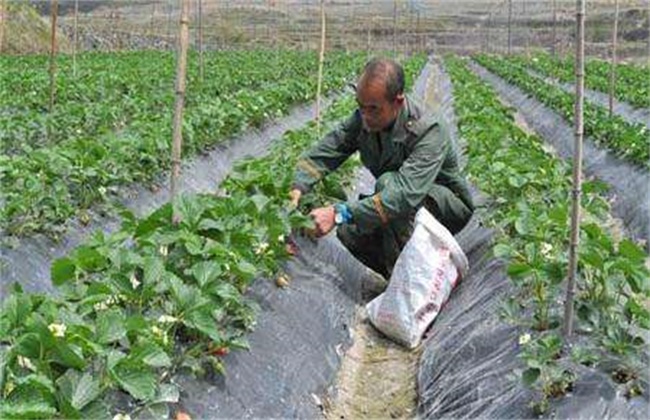
I. Whether to fertilize during the flowering period
1. Strawberries may need topdressing during the flowering period, and generally phosphorus and potassium fertilizers are added, because once the flowering and fruiting stage lacks the two fertilizers phosphorus and potassium, the cold resistance of strawberries will be reduced, few flowers will form, the flower buds will be weak, and flowering and fruiting will be affected. Not only will the fruit-setting rate be low, but it will also lead to poor coloring and lower sugar content, making the fruit highly prone to rot and deterioration, and poor in storage and freshness retention. Therefore, during the strawberry period, attention must be paid to adding phosphorus and potassium fertilizers to prevent strawberries from having their yield and quality affected by a lack of phosphorus and insufficient potassium.
2. During the flowering and fruiting period, a phosphorus and potassium fertilizer must be applied every 15-20 days, applying 40-50 kg of monopotassium phosphate per mu each time, or applying 70-80 kg of decomposed bone meal, diluting it with water 80-100 times, and evenly drenching it into the soil at the plant roots. In addition, a low-concentration monopotassium phosphate solution can be sprayed once every 7-10 days, evenly sprayed on all leaves, flower buds, flowers and fruits, until water droplets are about to drip.
II. Fertilization precautions
1. When laying the drip irrigation pipe, the drip holes should face upward, so as to prevent sediment from clogging the drip holes or strawberry roots growing into the drip holes and causing blockage.
2. The spacing of the drip holes in the drip irrigation pipe should be reasonable, ensuring that during drip irrigation the wet cross-sections formed by the drip holes can overlap.
3. If it is for topdressing strawberries in greenhouses in the north, the water used is best above 20 degrees, so as to avoid a low temperature drop that is unfavorable to root growth.
4. After strawberries flower and fruit, every watering should be accompanied by fertilizer. Before fertilizing, first water for 20 minutes, then fertilize along with the water, and after fertilizing, water again for 10 minutes.
5. During the entire growth period of strawberries, a single high-potassium fertilizer, such as potassium sulfate, should best not be used more than 3 times.
6. Watering and topdressing should be determined according to the weather, soil fertility conditions and the growth condition of the seedlings.
7. When topdressing, attention should be paid to supplementing trace elements such as calcium, boron, iron and magnesium.
The above is an introduction to the precautions for fertilizing strawberries. I hope it can help you. To learn more related knowledge, please follow us.