Detailed Explanation of Key Points of Yellow Peach Orchard Management Techniques
After yellow peach trees are planted, they require long-term maintenance and management, which involves a great deal of work and careful care of the yellow peach trees. Different maintenance work and different management tasks are needed at different growth stages. At present, the main tasks are proper fertilizer and water nutrition management, pruning, as well as temperature and humidity control, ventilation and air permeability, and soil management. There is also the prevention and control of pests and diseases that harm the fruit trees. Please continue reading for the specific details.
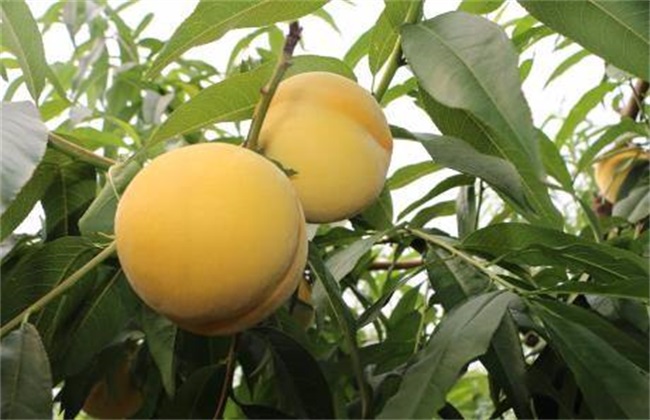
1. Fertilizer and Water Regulation
The general fertilization principle is to apply thin fertilizer frequently, promoting early and controlling later. Apply fertilizer multiple times before June, generally applying 50 grams of urea per tree at a time. 50 grams of monopotassium phosphate per tree, applying about three times. Yellow peach is suited to slightly acidic soil, so ammonium bicarbonate must not be applied, as ammonium bicarbonate alkalizes the soil. During the growth period, magnesium and iron elements must be supplemented, as they are easily deficient. Fertilization is greatest during the fruiting period, accounting for about 40% of the whole year's fertilization when added together. This is lower than the base fertilizer. Nitrogen, phosphorus and potassium should be used in combination for comprehensive fertilization.
2. Adjusting Pruning
Yellow peach has very strong sprouting ability and branching ability, so it must be pruned frequently during the growth period, mainly pruning water sprouts and overly dense branches, new shoots that are not retained, weak shoots, surplus shoots, and late autumn shoots that consume nutrients. Young trees are mainly for structural definition, leaving the trunk, retaining enough side branches, retaining branches level by level, and removing surplus branches. In summer, when growth is vigorous, fruiting trees can have their shoots replaced, cutting off some old branches and keeping new shoots. If some growing side branches are too densely packed, they can be pulled down with ropes to open the angle. Remove basal buds and surplus buds. Winter pruning mainly clears dead branches and diseased and pest-damaged branches, improves structure, and renews and rejuvenates the tree.
3. Fruiting Management
Yellow peach has three physiological fruit drops, so buds must be removed to promote strong branches, and then topdressing must be applied to maintain nutrition. Remove some branches and shoots to concentrate nutrient supply, thin the fruit, retain high-quality fruit at good node positions on strong branches, and also remove diseased fruit, mummified fruit. Small fruit and deformed fruit should all be removed. For cluster-borne fruit, retain one to two good fruit and remove the others. Spray growth regulators to protect the fruit. After spraying fungicide, bag the fruit to protect it from pests and diseases.
4. Pest and Disease Control
The main disease is peach anthracnose, which mainly harms the fruit, forming lesions, causing rot and drop. In addition to timely pruning of diseased fruit and diseased branches, before sprouting, spray 5 degrees Baume lime sulfur mixture mixed with 100-fold sodium pentachlorophenate solution to eliminate overwintering pathogens. During the disease period, spray 80% anthracnose Fumei 800-fold solution or 72% DuPont Curzate 800-fold solution. The common pest is the peach aphid, which pierces and sucks sap, causing sooty mold and spreading viral diseases. Set up yellow boards in the orchard to lure peach aphids, then kill them. Spray 40% dimethoate emulsifiable concentrate water solution at 1000-fold or 40% acephate emulsifiable concentrate water solution at 1000-fold.
Regarding yellow peach orchard management, it is mainly carried out differently according to tree age and different growth stages. The above is a detailed account of management after planting in a yellow peach orchard. Every period is very important, but the fruiting period is still a bit more important. The above content is welcome for reading and reference.