Detailed Explanation of Key Technical Points for Bayberry Orchard Management
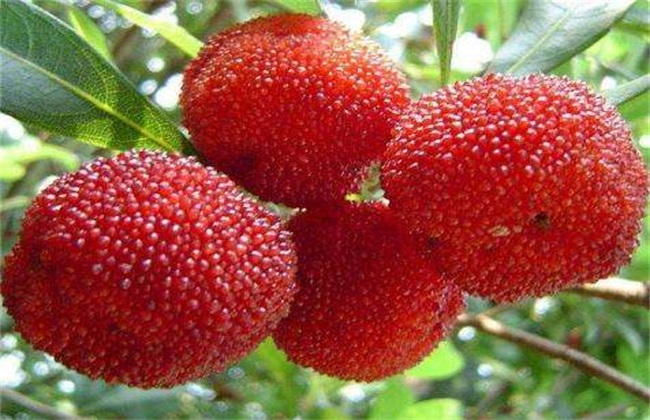
Bayberry is a fruit unique to China. Bayberry is rich in cellulose, vitamins and various other nutrients beneficial to the human body, and it also contains a variety of essential amino acids. Moreover, the bayberry fruit has a series of effects such as harmonizing the stomach and aiding digestion, and promoting salivation and quenching thirst, combining edible and medicinal uses in one. So when we grow bayberry, how should we manage it? Below, the editor will give you a brief introduction. Let's take a look together!
1. Scientific Fertilization
The fertilizer for bayberry trees is mainly farmyard manure. In June of the year of planting, apply 50g of nitrogen fertilizer per plant, then in August, apply an appropriate amount of decomposed rapeseed cake fertilizer per plant. Then, as time goes on, appropriately increase the amount of fertilizer applied. For example, when the trees are 2-3 years old, apply about 120g of nitrogen fertilizer per plant. After the fruit trees enter the production period, an additional fruit-picking fertilizer should be applied. During this period, the demand of bayberry for potassium fertilizer increases, so an appropriate amount of extra potassium fertilizer should be applied. This can increase the sugar content of the fruit and enhance quality. Finally, if the fruit load increases, an appropriate topdressing of compound fertilizer can be applied in May.
2. Soil Management
When young bayberry trees are planted, the planting holes will be filled by the roots of the bayberry trees after about 3 years. At this time, the roots will continue to expand further, and if they encounter hard soil, they will definitely be affected. So when planting, every year we must carry out intertillage on the soil outside the planting holes that has not been deep-plowed. Deep-plow it about 30cm, which can both loosen the soil and promote the development of the bayberry tree roots, and also remove weeds in the orchard. Finally, the time for deep plowing should be controlled according to the age of the trees. For example, for young trees it should be around February each year, while for trees in production it should be done in autumn.
3. Shaping and Pruning
The shaping method for bayberry trees is generally based on the open-center tree form, which can advance the fruiting time of the bayberry tree. After the first harvest of the bayberry tree, prune an appropriate amount of large branches, cutting off high branches, crossing branches, drooping branches and densely growing branches on the canopy. Do not blindly cut off the spring shoot flower branches; promote the sprouting of summer shoots, do a good job in renewing the inner canopy branches, and increase fruiting branches. From July to October, pruning should not be done, so as to promote flower bud differentiation of spring and summer shoots and avoid affecting the next year's fruiting. For the second pruning, trees with strong growth should be pruned appropriately early, while those with weak growth should be pruned appropriately late. Pruning should mainly target old and weak branches, pest- and disease-damaged branches, and overly long and overly dense branches.
4. Protecting the Tree Body
The large branches of bayberry do not have very strong resistance and are prone to dying from sun exposure or other reasons. So we must do a good job of protection to avoid direct sunlight. If there are dead branches, they should be cut off in time, ensuring the wound is smooth, then bandaged to promote healing. After snow in winter, promptly shake the snow off the branches to prevent excessive snow accumulation from breaking the branches. We should reasonably adjust protection measures according to different planting regions to achieve the goal of protecting flowers and fruits. Most importantly, we must also do a good job in pest and disease control to ensure yield and expand planting benefits.
The above is a brief introduction to bayberry orchard management techniques. The management work for bayberry is very important. In addition to the above management, we must also do various basic tasks such as flower and fruit thinning and weeding to ensure the normal growth of bayberry. That is all for today's introduction. This article is for reference only, and we hope it can help everyone!