Mastering the timing and methods of fertilizing bayberry
Bayberry is a specialty fruit of our country, and its fruit quality is relatively excellent, so it now has a fairly large market in our country. Moreover, the market price of bayberry is also relatively high, so the planting area is also continuously expanding. When planting bayberry, fertilization work is very important. So what are the fertilizer requirements of bayberry? When should it be fertilized? How should it be fertilized? Below, the editor will briefly introduce it to everyone, let's take a look together!
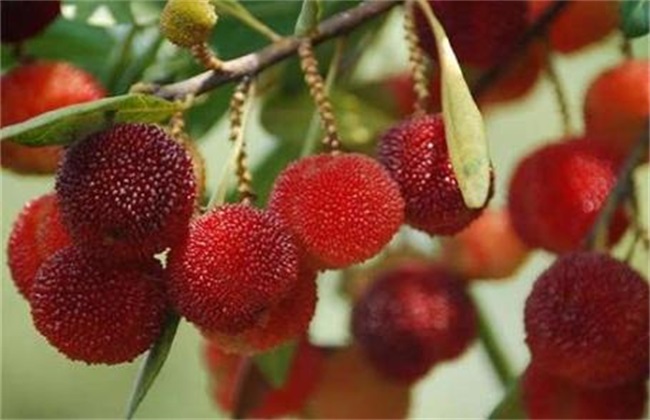
1. Fertilizer requirements
During growth, bayberry has a relatively large demand for potassium fertilizer, and it is not suitable to apply too much phosphate fertilizer. Also, among trace elements, it is very sensitive to boron. If bayberry lacks boron during growth, it will not only cause a decline in yield or even a total crop failure. The growth of the bayberry tree will also be affected by this and gradually die. If bayberry lacks boron, the leaves gradually become thin and small, the leaf texture becomes brittle, and leaves fall off very easily. Moreover, the flowering amount will also decrease significantly, and the fruit will shrink and dry. Therefore, when fertilizing, we must fertilize reasonably according to the fertilizer requirements of bayberry to meet the nutritional needs of bayberry growth.
2. Fertilizing time
The fertilizing time for bayberry generally begins around Qingming Festival, mainly to promote the growth of summer shoots. Then after harvesting fruit in an on-year, around July each year, apply a nitrogen-potassium fertilizer once, maintaining a relatively large proportion of potassium fertilizer. This prompts the bayberry tree to recover its growth as soon as possible and promotes flower bud differentiation. Then after harvesting fruit in an off-year, attention should be paid to timely application of compound fertilizer to prevent excessive flower bud differentiation in autumn and winter, which would increase the flowering amount the next year and make the fruit set exceed the load range of the bayberry tree. This would aggravate the biennial bearing phenomenon of bayberry trees.
3. Fertilizing young trees
Fertilizing young bayberry trees is mainly to promote the growth of young trees and prompt crown formation. Therefore, in order to achieve the goal as early as possible, in addition to applying sufficient base fertilizer before planting, during April to June, the peak growth period of bayberry trees, the principle of applying more frequently but in small amounts should be followed. Fertilize at least once a month, and appropriately increase the proportion of phosphate fertilizer. The ratio of nitrogen, phosphorus, and potassium fertilizer should be controlled at 1:0.5:1. If compound fertilizer is applied, then apply 0.1 kg per plant. Because the resistance of young bayberry trees is relatively poor, when fertilizing we should pay attention to dissolving the fertilizer in water before applying it. The fertilizing position should be controlled at about a 20 cm radius from the main trunk to prevent the fertilizer from directly contacting the roots.
4. Fertilizing fruit-bearing trees
After about 4 years of bayberry planting, the crown gradually forms and it begins to enter the fruit-bearing stage. At this time, the ratio of nitrogen, phosphorus, and potassium fertilizer for bayberry trees is somewhat different, mainly focusing on vegetative growth. The demand for nitrogen and phosphate fertilizer is relatively large. In order to ensure the growth of the bayberry tree roots and increase the speed of crown formation, sufficient pure nitrogen and phosphorus pentoxide should be applied per mu. After entering the fruit-bearing stage, attention should be paid to ensuring a balance of growth and nutrition. Appropriately increase the proportion of farmyard manure, improve the soil, avoid soil erosion, and reasonably apply an appropriate amount of trace elements.
The above is a brief introduction to the fertilizing time and methods for bayberry. The fertilization work for bayberry is very important. When fertilizing, we must ensure that the fertilizer nutrients are sufficient to promote the growth of bayberry trees. That is all for today's introduction. This article is for reference only, and we hope it can be helpful to everyone.