Key points for managing peach trees during the flowering period, fruit farmers should master them
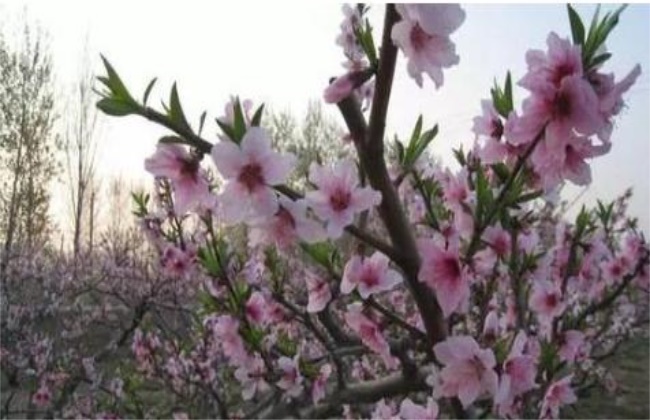
The flowering period of peach trees is the most critical period for their growth and development. It is related to the fruit set and yield of peach trees, and is the high-quality foundation for a bumper peach harvest. So how should peach trees be managed during the flowering period? Let's take a look below at the key points for managing peach trees during the flowering period.
1. Fertilizer and water management
When peach trees are bearing fruit in autumn, it is an important period for the absorption and utilization of nitrogen and trace elements such as calcium and magnesium. After applying base fertilizer last autumn, fertilization at this time should focus on quick-acting nitrogen fertilizer and trace elements. It is recommended to apply 15 kg of urea + 25 kg of potassium sulfate calcium magnesium + 20 kg of microbial inoculant per mu. For watering, do well in the two periods of watering before flowering and after flower drop. Watering before flowering can promote flower bud sprouting and new shoot growth, and increase the fruit setting rate. After flower drop, it enters the young fruit formation and swelling stage as well as the new shoot elongation stage. Watering at this time can promote the growth of new shoots, leaves and young fruit, and avoid fruit drop caused by lack of water.
2. Frost prevention
The temperature during the flowering period of peach trees is changeable, so be sure to pay attention to preventing the effects of late spring cold on peach blossoms. The following methods can be used to prevent frost damage. Irrigation before flowering can lower the ground temperature, delay root activity, postpone the flowering period, and reduce or avoid frost damage; whitewashing the tree trunk can make the tree temperature rise slowly, delay the flowering period by 3-5 days, and avoid and reduce frost; smoking in the orchard can also prevent frost. Smoking can reduce the release of soil heat, play a moisture-retaining effect, absorb moisture, increase ground temperature, and reduce or avoid frost.
3. Artificial pollination
For varieties with no pollen or a low fruit setting rate, artificial supplementary pollination can be carried out when the flowering period encounters late spring cold. First select varieties with early flowering, abundant pollen and strong compatibility, collect pollen, and dry it indoors in the shade. The indoor environment should be dry and ventilated, with the temperature controlled at about 20-25 degrees, and then stored in the refrigerator's fresh-keeping compartment. For artificial pollination, a writing brush can be dipped in pollen and dabbed onto the stigma of female flowers. One dip of pollen can pollinate 3-4 flowers. Generally, pollination time is 9-10 am or 4-5 pm on sunny and windless days. If it rains within -3 hours after pollination or late frost occurs, pollination needs to be repeated.
4. Pest and disease control
Before bud break, promptly eliminate overwintering aphids, mulberry white scale, and the primary infection sources of brown rot, shot hole disease and scab. Spray the whole orchard with lime sulfur mixture, or spray 1000-1500 times dilution of Decis or 2000 times dilution of chlorpyrifos, which can effectively prevent pests and diseases.
The above is an introduction to the key points for managing peach trees during the flowering period. We hope it can help you. To learn more related knowledge, please follow us.