What are the propagation methods for wax apple? One article explains it clearly
Wax apple, also called Java apple, is native to India and mainly grows in tropical regions. It is rich in various nutrients and has the effect of treating asthma. It is currently planted in large quantities in southern regions, has good economic value, and the planting returns can be considerable. In planting promotion, including introduction, the seedling-raising techniques commonly used for large-scale planting are cuttings, layering, and sowing. These several propagation methods will be described separately below, including the operation process of these seedling-raising methods and their advantages and disadvantages.
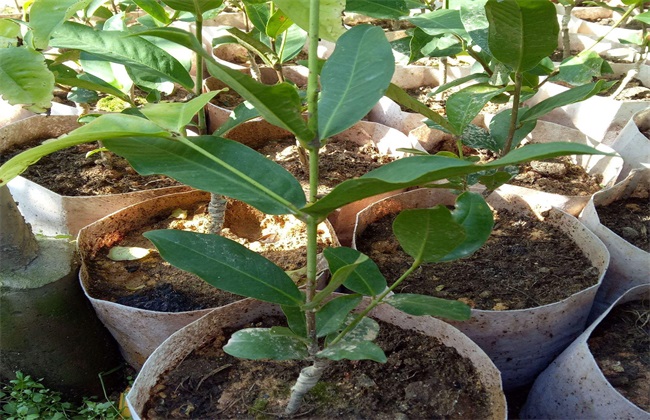
I. Cuttings
1. Advantages and disadvantages
It is currently one of the most commonly used seedling-raising methods. Propagation is fast, which can save time, and seedlings can still be raised in time when the planting season is approaching. It is easy to survive. For cuttings, as long as suitable branches and a suitable environment are available, cuttings can be taken, and if temperature and humidity are suitable, roots will form, with a very high survival rate. However, after multiple generations of cuttings, the excellent traits of the variety are likely to disappear or change, making yield reduction and quality decline likely.
2. Method
For cuttings, collect healthy young branches or hardwood branches for cutting. Cutting branches should be taken from healthy, vigorously growing mother plants. The branches should be 10 cm long, cut flat at the upper end and cut at an angle at the lower end. The cutting soil should be loose, deep, fertile, and well-drained and aerated. Insert the cuttings into the soil 6 to 7 cm. After cutting, water and set up a shade net for maintenance.
II. Air layering
1. Advantages and disadvantages
Layering is mostly used for fruit trees that are difficult to root from cuttings. However, layering has strong reproductive capacity and can also maintain the excellent traits and genetic genes of the mother plant. Therefore, this method can achieve both points, but production operations are relatively complex, and large-scale handling involves many procedures.
2. Operation
Layering should be carried out in summer. First select a robust branch with a thickness of 3 cm, then ring-bark 2 cm at the base, wrap it with disinfected moist soil, and after roots grow, cut it off from the base and plant it as an independent seedling.
III. Sowing
1. Advantages and disadvantages
Sowing can fully preserve the various characteristic traits of the mother plant, and the seedlings are relatively robust and highly adaptable. However, seed collection and processing, land preparation, and seedling raising take too long. If a large number of seedlings is needed in a short time, it is difficult to achieve, and it takes a long time and money.
2. Procedure
Sowing is generally carried out in spring. Sow in a seedbed with a plant spacing of 5 cm and a row spacing of about 5 cm. It can also be sown evenly by broadcasting, and thinning can be done after emergence. The sowing depth is about 4 cm, with a relatively shallow covering of soil. Then water, provide shade, and keep warm and moist. A seedbed can be made in a greenhouse.
There are three main propagation methods for wax apple. Each propagation and seedling-raising method has its own advantages and disadvantages. Seedling raising can be decided according to one's own needs and climate and environmental conditions. For specific operations, you can learn excellent methods and then accumulate experience yourself.