How to Propagate Olive Trees? A Detailed Guide to Common Propagation Methods
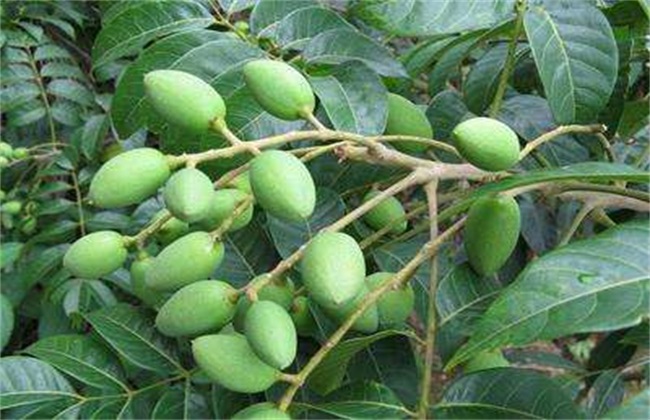
The olive tree is native to southern China, growing in mountain gullies at moderate altitudes. Its flesh is hard and spindle-shaped, and its pit is hard. The olive tree is a commonly used landscaping tree species, and its fruit can be used as medicine to treat diarrhea. It has excellent economic value. The propagation and seedling-raising technique for large-scale olive cultivation mainly involves seed sowing and seedling raising combined with grafting, which can maintain excellent genetic characteristics while also obtaining the quality traits of other varieties. This article will mainly introduce this seedling-raising method.
I. Seed Sowing and Seedling Raising
1. Seed Collection
Select high-quality fruits to be kept for seed, leaving them unpicked. Wait until the fruits are fully mature and the flesh becomes soft, then they can be picked. After picking, pile them together for about a week to let the flesh rot. Then put them all into salt water to soak and wash, washing off the flesh and mucus to ensure the seeds are clean, then rinse once more in water to wash off the salt water. After scooping them out and drying them, store them in sand to complete the after-ripening stage. Use 60% clean river sand, storing one layer of sand and one layer of seeds, building up about 5 layers. Control the temperature and humidity, and check for rot or spoilage. Generally, sand storage is done in a dry, shaded indoor space.
2. Preparation
You can raise seedlings in the ground, but for easier management, you can choose containers such as seedling bags or seedling trays. Clean the seedling trays thoroughly and prepare the nutrient soil. The seeds should be taken out the day before sowing and then selected, soaked in a chemical solution for disinfection, then soaked in warm water for two days, and after germination is promoted in an incubator, they can be sown, because the seeds are hard and difficult to sprout.
3. Sowing
Sowing should be done in early spring from February to March. After filling the seedling bags with nutrient soil, you can directly place 1 to 2 seeds in each bag. The sowing depth should be about 4 cm below the soil surface, cover with 1 cm of soil, water, and spray water to avoid washing away the covering soil. Move them to a shaded place or set up a shade net, and spray water once every evening.
4. Seedling Stage
Maintain the humidity and temperature of the soil in the environment. After seedlings emerge, prevent and control pests and diseases. Spread a layer of wood shavings or pine needles on the soil, which can keep warmth and moisture and prevent some diseases and weeds. After seedlings emerge, water and fertilize frequently to promote growth.
II. Grafting
1. Time and Method
Before the sap flows, after the seed-grown rootstock seedlings have grown and been transplanted, carry out the procedure around the end of March, operating on a sunny day when the temperature reaches above 15 degrees. Collect vigorous one- to two-year-old branches from adult trees as scions, then graft using the cut grafting method. The operation must be quick, align the cambium layers, and tie them securely. Check for survival, and re-graft if necessary. After survival, remove the binding and remove the buds below the graft.
Olive trees can be directly sown and raised as seedlings and then transferred to the field for planting, which ensures the plant's own characteristics. They can also be grafted after seedling raising, choosing to change and incorporate the characteristics of other plants, so that they can have multiple characteristics at the same time. Theoretically, this can be considered as two seedling-raising methods.