Detailed Explanation of the Key Technical Points for Seed Propagation and Seedling Raising of Miracle Fruit
Miracle fruit is native to West Africa and was introduced to China in the 1960s. It is suitable for growing in warm, relatively dry tropical areas. Its fruit is sweet and tart, and the plant is a small, dwarf evergreen shrub that also has some ornamental value. Generally, for large-scale promotion of seedling raising, several propagation methods are commonly used, including seeding, cuttings, and layering, but only seed propagation can maintain relatively complete superior genetic traits, so the method of seed propagation and seedling raising is mainly introduced here.
I. Seed Collection
In tropical cultivation, the seeds can be harvested once they mature, and they can be sown right after harvesting. Sowing is suitable all year round. Pick fresh, mature, large fruits that are free of pests and diseases. Be sure to pick fully ripe fruits, as the flesh separates easily from the seeds. Separate them by hand, then wash them, take out the flesh, and keep the seeds. Then soak and wash the seeds in running clean water for one hour to remove the mucilage, then take them out and dry them in the sun for later use.
II. Land Selection and Land Preparation
Miracle fruit has high requirements for soil, but to achieve high yields and produce more and better fruit, the best growing environment must be provided. Generally, it should be planted on deep, well-drained gentle slopes or on flat land that does not accumulate water. Before planting, the soil should be turned, but it does not need to be turned too deep; about 20 cm is enough, because its root system is not distributed deeply and it does not have an obvious taproot. When turning the soil, apply base fertilizer at the same time. About 500 jin of farmyard manure per mu is about right. Miracle fruit is relatively fond of fertilizer, and its place of origin is fertile land. The soil should be finely cultivated and loose. Then build seedbeds about 1.3 m wide, leaving ditches 20 cm wide and about 10 cm deep. Once this is done, planting can begin.
III. Sowing
When raising seedlings, the seeds can be broadcast directly on the seedbed, then covered with a 2 cm layer of soil, and then watered thoroughly. Generally, water until the entire seedbed is moist. Spraying water is best, as it will not wash the seeds away. After sowing, sterilized straw can be spread over the bed to provide shade and keep warmth. A shade net can also be used. After that, water every day, reduce the amount of watering after one week, and germination will occur in about half a month.
IV. Management After Emergence
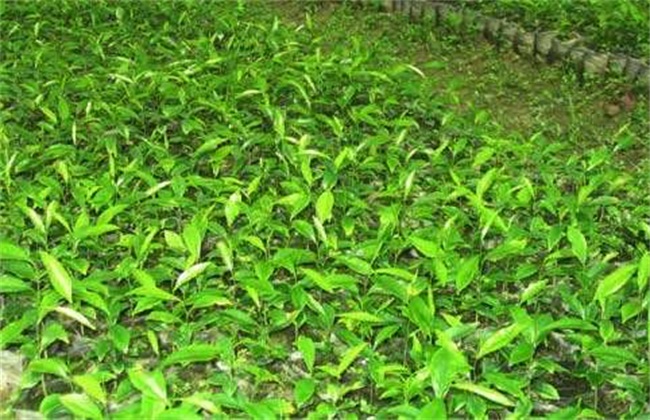
The period from seed germination and emergence to transplanting also falls within the scope of seedling raising. Generally, after emergence, the seedlings must go through a period of management and growth before they can be transplanted. At emergence, they can be exposed to appropriate light for photosynthesis and turning green, and the amount of watering can be reduced to prevent diseases caused by high temperature and high humidity. After the seedlings emerge evenly, thin them once, pulling out weak and diseased seedlings, and then harden the seedlings. At this time, water and fertilize less to train the root system. Then, when they grow to 30 cm tall, they can be transplanted. When transplanting, water thoroughly and minimize root damage.
The above are the main contents of seed propagation and seedling raising for miracle fruit cultivation. This can serve as a reference for everyone. Friends with experience can combine it with their own experience for practical operation. This is just to provide everyone with a bit more information. Thank you for reading and your support.