A Complete Analysis of Key Lemon Summer Management Techniques
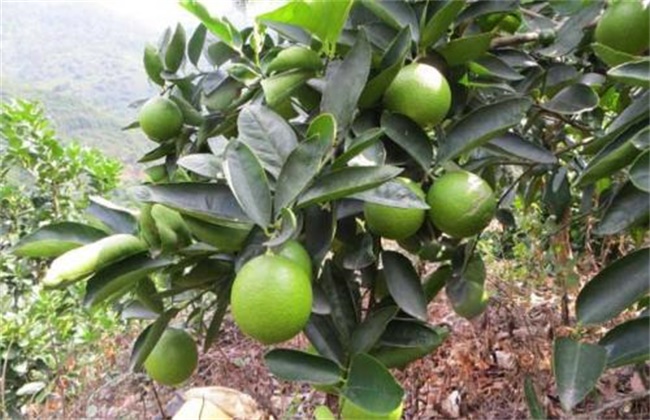
Lemons taste extremely sour, yet they are extremely popular in the market. They are rich in vitamins and also have beauty and skin-care benefits, making them deeply loved by women. Summer is exactly the period when lemon fruitlets swell, summer shoots emerge, and physiological fruit drop occurs. At this time, the focus of management is to ensure lemon yield and improve quality. So how should lemons be managed in summer? Let's take a look.
1. Soil, Fertilizer and Water Management
Summer is hot and rainy, and the humidity in the orchard is relatively high, which is not conducive to lemon growth, so drainage in the orchard should be strengthened in a timely manner and drainage ditches should be properly prepared. If drought occurs and soil moisture is below 60%, irrigation should be carried out immediately to ensure there is no shortage of water during the lemon fruiting stage. If water is insufficient, water-saving irrigation methods such as sprinkler irrigation or drip irrigation can be used, and after irrigation, straw or rice straw can be used as mulch to increase humidity and lower temperature. In summer, both fruitlet swelling and summer shoot emergence require large amounts of nutrients, and insufficient nutrients may lead to poor growth, so fruit-strengthening fertilizer should be applied in a timely manner. Fertilization should be determined according to weather conditions, and the amount of fertilizer should be determined according to soil fertility status and tree vigor. Generally, young trees are fertilized 5-10 times per year, applying frequently and lightly, mainly with quick-acting nitrogen fertilizer, combined with phosphate fertilizer, potassium fertilizer and human and livestock manure. Fruiting trees are fertilized 5-6 times per year, with several foliar fertilizer applications during the tender shoot growth period, and summer fruit-strengthening fertilizer should be applied heavily. In the idle winter season, combined with shallow ploughing and soil banking, dig trenches outside the canopy, apply 100 kg of compost or barnyard manure per tree, mix it evenly with the soil, and then cover with soil.
2. Summer Pruning
Summer pruning is extremely important. For young trees, the main focus is training branches and setting the trunk. After the summer shoots mature, pinch off the growing tips at plump buds on branches 40 cm from the ground to encourage 4-6 new shoots to emerge at 30-40 cm, forming branches. For mature fruiting trees, summer shoots should be removed in a timely manner to prevent summer shoot growth from competing with fruit for water and nutrients, reducing the second physiological fruit drop. At the same time, weak branches, diseased and pest-infested branches, densely growing branches and leggy branches should be pruned off to keep the canopy well ventilated and. Wait, need no Chinese. "well ventilated and" contains Chinese. Correct: well ventilated and penetrated by light. For some plants with heavy fruit load and weak tree vigor, moderate heavy pruning can be carried out before the Summer Solstice, followed by strengthened fertilizer and water management, to promote strong tree vigor and lay the foundation for a bumper harvest the following year.
3. Fruit Bagging
Fruit bagging is a common means of increasing yield and improving quality. For lemon bagging, it is advisable to choose special lemon paper bags that are black inside and yellow outside, double-layered, and to bag fruits from plants with good tree vigor, good management level, or good appearance, without disease or pest spots, and 30-40 cm in diameter. Before bagging, sterilization and pest control should be carried out last, so as to avoid poor bagging results or loss of the bagging effect.
4. Pest and Disease Control
The main pests and diseases occurring on lemons in summer are red spider mites, rust mites, anthracnose, scab, and so on. For red spider mites, 20% tetradifon emulsifiable concentrate can be sprayed at 2000 times dilution for control; for rust mites, 10% fenbutatin oxide suspension concentrate at 2000 times dilution and Xinguozhi film can be used for control; for anthracnose and scab, 10% Score water-dispersible granules at 3000 times dilution with water can be used for control.
The above is an introduction to lemon summer management techniques. I hope it can help you. To learn more related knowledge, please stay tuned to us.