What should be noted when introducing blueberries?
Blueberries have extremely high economic value and development prospects, and are currently a premium health fruit on the market. Their nutritional value and medicinal value have been widely developed, and deep-processed blueberry products are endless, with good market returns. However, wild resources are limited, so large-scale artificial cultivation is imperative. But there are many issues to note when introducing blueberries. Below is an introduction for everyone.
1. Cultivated varieties
When purchasing seedlings, the first thing is to choose the right variety. A variety is the key to the success or failure of blueberry cultivation, and there are currently many blueberry varieties. Before introduction and cultivation, if blueberries are also grown locally, it is best to investigate the locally cultivated blueberries, so as to avoid repeatedly introducing varieties that are unsuitable for local cultivation or have poor returns. It is recommended to choose large-fruited varieties; the fruit is larger, more favored by consumers on the market, and the economic returns are also relatively good.
2. Seedling selection
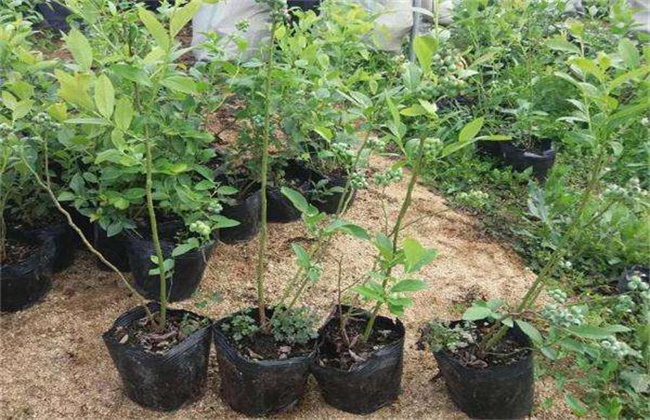
At present, there are relatively large blueberry variety and seedling sales companies at home and abroad, but there are not many truly pure varieties. If you want to buy and introduce seedlings of truly pure varieties, you need to purchase from regular and powerful nursery companies, so as to ensure the quality of the seedlings and reduce the risk of introduction. At the same time, when selecting seedlings, it is best to choose large seedlings of 2-3 years or more. They should have 3~5 branches, be more than 30 cm, free of pests and diseases, have complete roots, be free of mechanical damage, and be robust seedlings for cultivation.
3. Pollination varieties
Some blueberry varieties are self-unfruitful, so pollination trees must be configured. Generally, highbush blueberry varieties can be selected as pollination trees. Lowbush and highbush blueberries have relatively high self-fruitfulness rates, but cross-pollination can significantly improve yield and quality. The ratio of pollination trees to main cultivated varieties is 1:1 or 2:1.
4. Soil and pH value
Blueberry is a perennial fruit tree. One planting can grow for several decades. When introducing and cultivating, long-term planning must be done well. Before the blueberry seedlings are purchased, the land must be prepared in advance and the acidity adjusted. Brown soil, yellow soil, and red soil are all acidic soils and are relatively suitable for blueberry cultivation. Generally, weakly acidic and neutral soils can also be planted after improvement. If the soil pH value is above 7.0, blueberry cultivation will be more difficult, and it needs to be solved by adding some sulfur powder and increasing the amount of organic matter. As for calcareous soil and saline-alkali land, the soil is relatively heavy and sticky. If there are no irrigation conditions, it is best not to plant, as it is extremely easy to fail.
The above is an introduction to the notes on blueberry introduction. I hope it can help you. If you want to learn more related knowledge, please stay tuned to us.