How to Thin Flowers and Fruits on Citrus Trees? A Full Breakdown of Practical Measures
Although there are many types of citrus, most of them share the trait of producing many flowers and many fruits. Citrus trees often burst into full bloom at flowering time, but flowers keep dropping throughout the entire flowering period, and in the end only one third of the flowers set fruit. Compared with other fruit trees, citrus also sets a large number of fruits, but the number that finally holds firmly drops again. At this point, if no one selects and thins the flowers and selects and thins the fruits, letting nature take its course may lead to considerable losses.
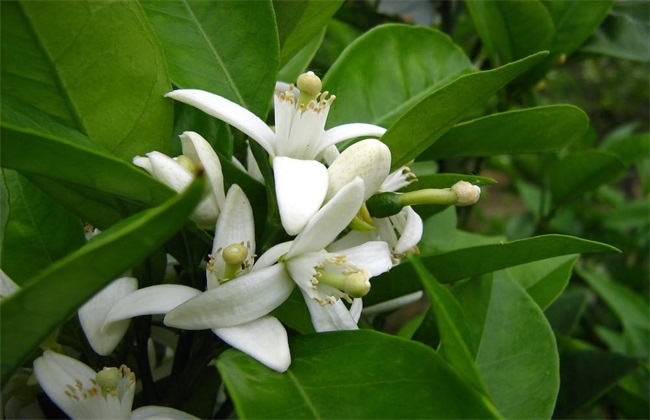
I. Purpose of Thinning Flowers and Fruits
Citrus produces an extremely large number of flowers, but they cannot all turn into fruit. 90% of the flowers will drop with physiological flower and fruit drop, which consumes a large amount of tree nutrients and weakens tree vigor. Therefore, most of the flowers should be thinned out, leaving the best flowers in the best positions to set fruit. After fruit set, only the fruits on fruiting branches with clearly stable fruit set need to be kept, while weak branches should keep fewer fruits, in order to concentrate nutrients and maximize their use in the useful parts.
II. Flower and Fruit Thinning
1. Manual flower thinning
Flower thinning can be carried out throughout the entire flowering period, but the main principle is still the earlier the better. The earlier it is done, the less is consumed; on the contrary, the more is consumed. Generally, fruiting branches growing on slender weak branches, defoliated branches, and basal branches are thinned together with their flowers and branches. Flowers on late autumn shoots or on some shoots whose leaf color never turns green may be abnormal and need to be cut back, keeping a portion of possibly effective flowers, or they may all be removed. When multiple flower buds grow in the leaf axils of the same flowering and fruiting branch, only two good flower buds need to be kept, and the rest should all be removed. In addition to these, all weak flowers, incomplete flowers, flowers damaged by pests and diseases, poorly developed flowers, overly dense branches, and leggy branches should all be removed.
2. Manual fruit thinning
At the beginning of fruit set, you can first shake the tree. Fruits that fall off with a gentle shake are all fruits that cannot hold. Then diseased branches and diseased fruits should all be removed. In addition, keep 6 to 8 fruits on strong fruiting branches, keep 5 to 6 fruits on slightly weaker fruiting branches, and thin out the rest. Fruits that are too densely clustered in the same space should have some removed.
3. Chemical flower thinning
In regions and varieties that flower early, naphthaleneacetic acid can generally be sprayed about 20 days after full bloom to thin flowers, but for varieties that flower late, spraying can begin one month after full bloom, relatively delayed. After spraying, weak flowers drop off on their own.
4. Chemical fruit thinning
Manual thinning consumes a lot of labor and has a relatively high cost, so growth regulators can be used to thin flowers and fruits. Generally, ethylene accelerates abscission layer formation and has a fruit-dropping effect, so indole ester can be sprayed to increase the tree's ethylene content for fruit thinning. Ethephon can also be used; it produces more ethylene than indole ester, but for a shorter time.
The reason for thinning flowers is to better preserve flowers, then concentrate high-quality flowers for fruit set and reduce consumption. Likewise, thinning fruits is also to concentrate nutrients into high-quality fruits, preserve fruits, and improve yield and fruit quality. Therefore, flower and fruit thinning should be viewed correctly. Do not feel regretful about it, and avoid alternate bearing.