Detailed Explanation of Grape Water-Saving Irrigation Methods and Technical Points
Grape is a drought-tolerant fruit tree, and areas with 600—800 mm of rainfall are most suitable for its growth. In these areas, if soil moisture conservation is done well, a certain yield can be obtained even without irrigation all year round. Nowadays, vineyard water-saving irrigation methods are widely studied internationally, reducing grape irrigation water use by half while still ensuring yield and quality. Let's take a look.
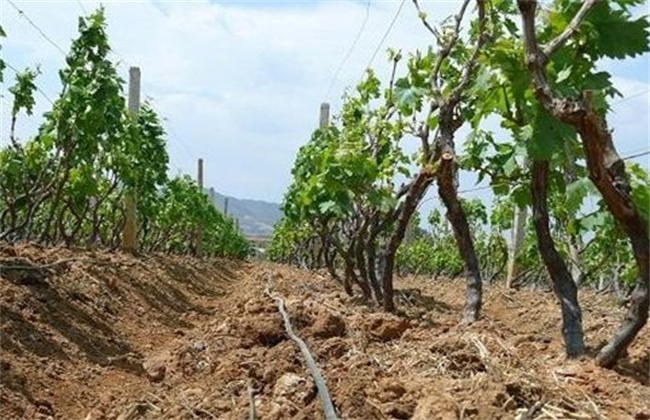
1. Surface irrigation
Surface irrigation is a method of watering in ponds, and its techniques are constantly being developed. Common surface irrigation includes furrow irrigation. Traditional furrow irrigation involves letting water into the furrows, which is neither accurate nor convenient, and also causes water loss through seepage. At present, foreign countries use siphon tubes or gate hole pipes, which can increase field water use efficiency by 5%-10%. There is also film-hole irrigation, also known as membrane hole irrigation, in which furrows are made on the plastic film, and water flows along the film to the holes and seeps into the soil. This gives high irrigation efficiency, can save 25%-35% of water, effectively increase yield by 15%-20%, and requires no other facilities, with strong adaptability.
2. Sprinkler irrigation
Sprinkler irrigation is also a commonly used water-saving irrigation method today. It sprays water through the air. Its advantages are uniform irrigation, less occupation of cultivated land, saving labor, and strong adaptability to terrain. But it also has drawbacks: it is greatly affected by wind, and equipment investment is high. In China, the more commonly used types include fixed pipeline sprinkler irrigation, semi-mobile pipeline sprinkler irrigation, rolling movable sprinkler branch pipes, and center-pivot sprinkler machines.
3. Drip irrigation
Drip irrigation is a precision irrigation method. It uses small plastic tubes to deliver irrigation water directly near the roots of each crop, and water slowly drips out from the emitters. Water is applied only where it is needed, irrigating the crop rather than the land. It can also keep the moisture at the crop roots in an optimal state for a long time, saving water while increasing yield. However, the drawback is that the emitter flow holes apply water slowly, making them very prone to clogging. Therefore, irrigation water must be carefully filtered and treated according to the season to avoid clogging the emitters. Commonly used methods include fixed surface drip irrigation, semi-fixed surface drip irrigation, subsurface drip irrigation under film, and underground drip irrigation.
4. Seepage irrigation
Seepage irrigation is somewhat similar to underground drip irrigation, except that seepage heads replace emitters and are buried underground. Water from the seepage heads does not flow out drop by drop like emitters, but slowly seeps out, so the seepage heads are not as easily clogged as emitters.
5. Underground irrigation
Underground irrigation is irrigation by controlling the groundwater level. During irrigation, the groundwater level is raised to the height of root activity, while the surface remains dry, so it is very water-saving. When not irrigating, the water level is lowered. This method has great limitations and can only be carried out when there is an impermeable layer below the root activity layer.
The above is an introduction to grape water-saving irrigation methods. We hope it helps you. To learn more related knowledge, please stay tuned to us.