Detailed explanation of key techniques for high-yield cultivation of March plum
March plum is an early-maturing variety of plum. Generally, this plum ripens in March and can be harvested. Generally, March plum is sour, crisp and tasty. After pickling, the fresh plum can then be eaten, and it can also be made into preserved fruit, so March plum now occupies a unique market in plum cultivation and sales. Therefore, many people have begun to grow this earliest-to-market March plum. Many people are also very concerned about how to achieve high yield when growing March plum. Today, I will introduce it to everyone.
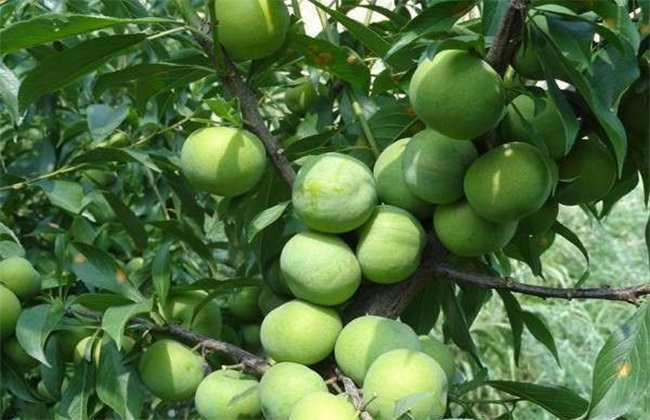
I. Seedling raising and planting
Plum trees can use several propagation methods, but in actual production, the method of sowing rootstock and then grafting is generally used. This is because rootstock is generally cold-resistant, drought-resistant and waterlogging-resistant, with wide adaptability and strong resistance, while the scion often has superior varietal characteristics, so grafted seedlings are chosen. Generally, the rootstock is sown first, and when the rootstock grows to about 20 cm, the scion can be prepared for grafting. The most common grafting method is the bark grafting method. Prunus tomentosa can be used as rootstock. Grafting is generally carried out in spring and is easy to survive. When planting, the best row spacing is about 3 m, and the spacing is about 2.5 m.
II. Site selection
For plum planting, the site should generally be soil with good moisture and temperature conditions, so generally the best is a hillside with slightly higher terrain. The soil is best if it is deep, flat, rock-free, well-drained structural soil. Do not plant it in saline-alkali land, gravel land or low-lying land. As for light, it does not necessarily need to be sunny; it is not strict about light requirements.
III. Fertilizer and water
Base fertilizer: before planting in the first year, apply farmyard manure as base fertilizer when preparing the land. Generally, apply about 2000 jin of base fertilizer per mu. This is necessary in the first year, when the trees must be given more. After that, when applying base fertilizer, it is about 1500 jin per mu. One week before applying base fertilizer, irrigate the whole orchard once, so as not to damage the root system during planting. Then there is topdressing. In the first year, basically no topdressing or little topdressing is done. In the second year, more topdressing can be done, mainly during the flowering period and fruiting period. For topdressing, generally apply about 500 jin of farmyard manure per mu once during the flowering period. During the fruiting period, apply topdressing multiple times, about 100 jin each time. Each time, irrigate one week before topdressing. Also, apply base fertilizer after fruit harvesting.
IV. Training and pruning
Generally, after planting, begin trunk training at 70 to 80 cm above the ground, remove all buds on the main trunk, then select and keep three to four healthy branches as side branches, and then remove the other branches. After that, branches can continue to be kept, with five to six branches kept on each side branch. In this way, keep branches three to 4 times, and the tree crown takes shape. After one retained branch grows to more than 1.5 m, it should be pinched. Then, after the shape is set, every year prune diseased and pest-infested branches, dense branches, dead branches and excessive vegetative branches, and at the same time renew and rejuvenate them.
The cultivation of March plum is largely similar to that of other plums, but because the ripening period is different, we need to adopt different management measures, and the points to note will also change. I hope you can find corresponding good methods for planting and achieve the goal of high yield.