Nectarine Fertilization Techniques: Key Points and Methods Explained
Fertilizing nectarines is the best way to help them grow, achieve high yields, and produce quality fruit. However, fertilizing nectarine trees requires different methods at different stages, and the amount, type, and method of fertilization should be determined through comprehensive consideration of different varieties, environments, tree age, soil conditions, as well as the growth characteristics and nutrient requirements of nectarines.
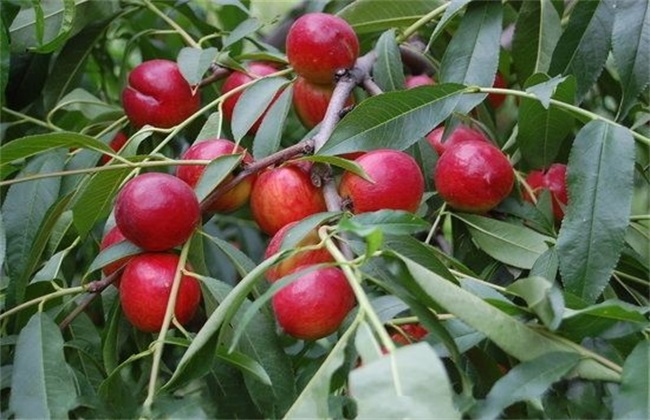
I. Fertilization Requirements
Most nectarine varieties currently planted are bred dwarf varieties. Their root systems are not deep, with no obvious taproot, and are mainly distributed horizontally in the soil at 10 to 40 cm, roughly around the outer edge of the canopy. Therefore, fertilization can mainly adopt the ring-trench method, and the fertilization depth should be within reach of the root system; the roots require relatively more oxygen, so the soil must not be heavy clay; a pH below 4.5 easily leads to calcium, phosphorus, and magnesium deficiency, while a pH above 7.5 leads to iron, zinc, and manganese deficiency, causing deficiency symptoms.
II. Fertilization Techniques
1. Young Trees
The main practice is to apply sufficient base fertilizer before planting, with generally little or no additional topdressing. When preparing the land for planting, apply about 500 jin of farmyard manure per mu as base fertilizer; compost, piled manure, or fermented manure are all acceptable as long as they have been thoroughly decomposed and fermented, but do not apply highly potent poultry manure. The application amount is roughly 70% of the annual fertilization total. Applying sufficient base fertilizer ensures the growth of young trees. Young trees do not bear fruit and only grow vegetatively, so to avoid excessive vegetative growth, less nitrogen fertilizer can be applied; no nitrogen fertilizer is applied during topdressing, and more phosphorus and potassium fertilizer is applied to strengthen trunk and branch growth.
2. Mature Trees
Base fertilizer is applied in autumn after harvest when the trees enter dormancy. After harvest, promptly replenish tree nutrition to avoid weakening tree vigor, keep the trees warm to prevent frost damage, and prepare for new fruiting branches the following year. Therefore, about one week after harvest, apply some quick-acting chemical fertilizer to restore tree vigor, then apply farmyard manure. Generally, applying about 200 jin of chemical fertilizer and 400 jin of farmyard manure per mu in combination ensures long-lasting fertilizer efficiency. For large planting areas, the strip application method can be used to save labor and resources, but hole application and ring-trench application are most beneficial for absorption.
The first topdressing is at the flowering stage. The flowering stage requires large amounts of nutrients, so a substantial amount of compound fertilizer needs to be applied to promote flowering. The second is at the fruit expansion stage, when growth is rapid and fertilizer and water supply must keep up; mainly apply phosphorus and potassium fertilizer with less nitrogen fertilizer. In addition, foliar topdressing with trace fertilizers such as calcium, magnesium, and zinc.
Nectarine fertilization means applying fertilizer separately to fruit trees of different ages and using different amounts of fertilizer at different stages. So the above is the fertilization process for nectarine trees, all of which involves targeted fertilization. Hopefully this is helpful to those who have planting needs.