Detailed Explanation of Key Management Techniques for Dragon Fruit During the Fruiting Period
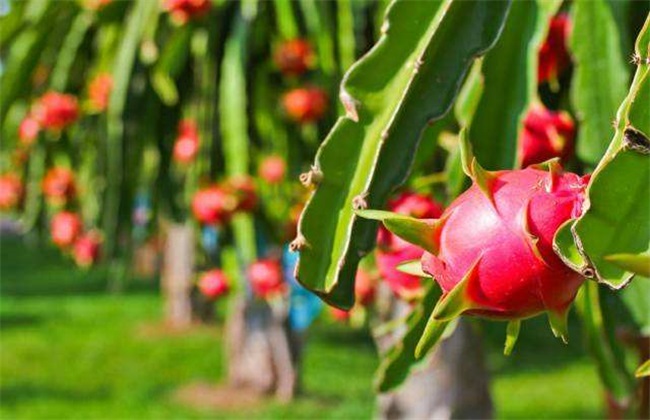
Dragon fruit is a fruit of the Cactaceae family, and the plant resembles a cactus in shape; it roots easily from cuttings and survives well. Therefore, it is relatively easy to manage when planted, and it has a wide range of adaptability, being able to grow in many regions around the world. As for the management of dragon fruit, the main focus can generally be placed on management during the fruiting period, since fruit yield and quality are what matter most. During the fruiting period, the following tasks should be carried out carefully.
1. Temperature
Dragon fruit is a tropical fruit, so it requires relatively high temperatures throughout its growing period, and low temperatures are not suitable for its growth. However, temperatures above 38 degrees or below 10 degrees will affect its growth and may cause it to stop growing, making it unable to flower and bear fruit. The best growing temperature is between 25 degrees and 35 degrees. It is best to plant it in regions where the year-round temperature is above 20 degrees.
2. Fertilizer and Water
The dragon fruit root system is relatively weak, with fibrous roots distributed widely, and the roots have poor tolerance to water, generally able to remain only moist. However, it cannot tolerate waterlogging; after one day of waterlogging, most of the root system will die, and in severe cases the plant will die. Dragon fruit is relatively drought-tolerant, but it needs a normal water supply to survive; generally, one dragon fruit plant needs to absorb about one jin of water every three days to maintain its life activities. At high temperatures, water must be sufficient to avoid fruit cracking caused by rapid growth without water. When the branches are observed to be flat, nutrient solution needs to be supplemented. Keep one high-quality flower per fruiting branch, with fertilizer supplied in a concentrated way.
3. Disease Control
To control canker disease, which mainly damages stems and fruits, high temperature and frequent rain are triggering factors, and the disease breaks out severely. Use broad-spectrum fungicides such as thiophanate-methyl, carbendazim, and mancozeb combined with copper-based preparations for spraying, or apply (Kuifuling) stock solution by smearing, and prune diseased stems and fruits and burn them in a centralized manner. Anthracnose mainly infects fruits in the later stage and also prevails in high-temperature and high-humidity environments. Dense planting and excessive nitrogen fertilizer are triggering factors. It mainly appears as water-soaked sunken brown spots; use the broad-spectrum fungicide Liangguoan 300-fold solution + Wofengsu foliar fertilizer 25 milliliters to 30 jin of water for spraying.
4. Bagging and Harvesting
After the fruit ripens and changes color and becomes slightly soft, paper bags can be put on to prevent mechanical damage from farming operations or damage from birds and insects gnawing. Bag on cloudy and dry days, and the surface of the fruit to be bagged must not have moisture. About 20 days after bagging, the fruit is basically ripe and can be harvested as early as possible together with the bag.
The management of dragon fruit during the fruiting period should take into account the management done well in other periods, and special management should also be carried out according to the characteristics of the fruiting period. Then the content should be refined, and all the details of the work to be managed should be done well. In this way, this management task is completed.