Detailed Explanation of Key Techniques for High-Yield Cultivation of Ruby Seedless Grapes
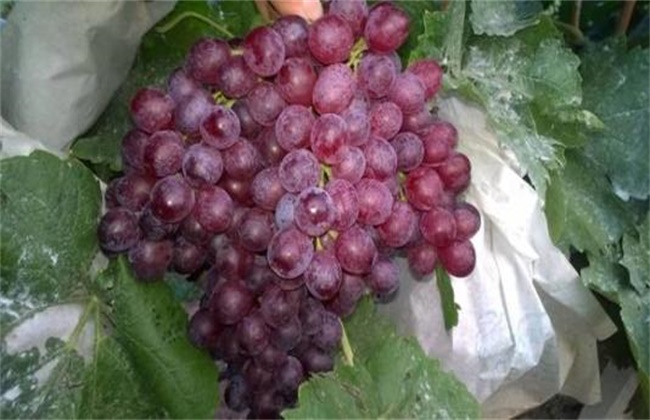
Ruby Seedless grape is a late-maturing seedless variety. This variety has strong growth vigor and a high sprouting rate. Generally, it begins to bear fruit in the second year after planting. It also has strong adaptability and is not demanding regarding soil, fertilizer and water, and it offers relatively good economic returns. So, if you want high yields from Ruby Seedless grapes, cultivation techniques are extremely important. Let's take a look together at the high-yield cultivation techniques for Ruby Seedless grapes.
1. Planting
Because the seedlings lose water during winter storage and transport, they must be soaked so the seedlings take up enough water and the survival rate is improved. Planting is generally done in March-April. For cuttings, the bed surface should be irrigated, 0.35 kg of acetochlor per mu should be sprayed for weed control, and then plastic film should be laid over it before inserting the cuttings. After the upper bud is level with the ground, the young bud should not be pressed under the plastic film. Cover it with a small mound of soil, and after about half a month level the small mound back down, and the young bud will naturally emerge.
2. Pruning and Tying
For one-year-old seedlings, when the grape branch grows to about 40 cm, pinch the tip in time, and also trim off the tendrils, leaving three main canes. Set up the trellis and tie them in time. In winter, leave 6-7 plump buds per branch and cut off all the rest. For two-year-old seedlings, leave about 10 fruiting canes and tie the canes onto the trellis, cut off the tendrils, and pinch the tips at full bloom. Also leave one secondary shoot per branch. In winter, leave 4-5 fruiting mother canes, and on each cane leave 3-5 plump buds for short pruning. Seedlings over three years old are pruned the same way as two-year-old ones.
3. Fertilizer and Water Management
For one-year-old seedlings, in addition to applying organic fertilizer before planting, apply 25 grams of potassium sulfate compound fertilizer per plant in mid-June, and apply 2 kg of organic fertilizer per plant in October, with an appropriate additional application of phosphate fertilizer. For two-year-old seedlings, before sprouting, apply 100 kg of nitrogen-phosphorus-potassium compound fertilizer per mu as appropriate. Apply potassium fertilizer as a top dressing in June-July. After harvest, apply organic fertilizer in autumn together with an appropriate amount of nitrogen fertilizer and phosphate fertilizer. After that, the amount of fertilizer applied should be determined according to the number of fruits. In addition, before the grapes sprout, water heavily once together with fertilization, and water once with winter irrigation water in early winter. In summer and autumn, determine the number of waterings according to the weather, and pay attention to drainage during the rainy season.
4. Fruit Bagging
Ruby Seedless grape is a premium fruit, so in order to improve quality, bagging should be carried out. The bagging time starts 2 weeks after flowering, and the bags chosen should be suitable. Before bagging, spray a fungicide and insecticide once, and bag after the liquid dries.
The above is an introduction to high-yield cultivation techniques for Ruby Seedless grapes. We hope it helps you. To learn more related knowledge, please stay tuned to us.