Banana Cultivation and Management Techniques
Bananas are a common fruit found in all seasons in many places, but they can only be grown in tropical regions. They have a long cultivation history and are quite popular among people, with a large market space for sales to non-tropical regions. So now, in tropical regions, bananas are planted on a large scale. Banana cultivation mainly depends on the management during the later growth period, and the management of young banana trees and mature trees also differs. The content of this article mainly covers this aspect of management, and you can pay attention to the following content.
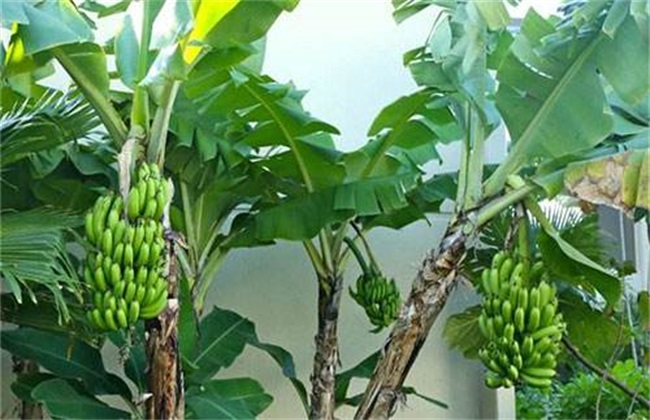
1. Planting
When the seedlings grow to 6 to 7 leaves, they can be transplanted. Before transplanting, hardening off is necessary. The hardening method is to cover the seedlings with film bags, which can strengthen the roots and stems, and then plant them, which can improve the survival rate to some extent. Hardening off is
one of the guarantee conditions for high yield and quality. Planting should be done on cloudy days or in light rain, which is beneficial for root growth and reduces transpiration. The film bags need to be removed before planting, and after planting, water thoroughly to stabilize the roots.
2. Light
During the seedling stage, bananas are easily sunburned on their tender tissues by strong light, so shade nets should be covered for one week to half a month after planting to reduce direct sunlight and avoid scorching. Wait until the seedling recovery period is over and the leaves are slightly harder before removing the shade nets. Generally, after sunburn, blisters or dehydration and blackening occur, affecting photosynthesis. Light in tropical regions generally meets the growth needs of bananas, so insufficient light is not a problem.
3. Fertilizer and Water
Generally, the fertilizer requirement for bananas is a combination with the most potassium, followed by nitrogen, and the least phosphorus, which is the appropriate fertilization amount for banana growth. When planting, sufficient base fertilizer is needed. The base fertilizer can use livestock manure or decomposed compost made from leaves and other materials. You can test the amount of nitrogen, phosphorus, and potassium in some fertilizers and make corresponding adjustments. If lacking, chemical fertilizers can be supplemented; if excessive, the amount of compost materials can be reduced. This way, the most suitable fertilizer is configured. In addition to base fertilizer, during the flowering and fruiting period, topdressing can be applied in small amounts multiple times. Do not apply too much at once, as high concentration can easily damage roots. About one week before applying base fertilizer, irrigate once to moisten the soil and protect the roots. Topdressing can be made into dilute fertilizer water for multiple drip irrigations.
4. Pests and Diseases
Seedlings are easily damaged by whiteflies. Since seedlings are fragile during this stage, low-concentration, multiple-interval spraying can be used for control. For mature plants, the main control target is aphids. Aphids suck sap and transmit viruses, causing significant damage. Generally, 40% dimethoate 600 times solution is used for control. Mature plants have higher tolerance to pesticides, so spraying can be done about once a week. The main disease to control is bunchy top disease. In the early stage, you can use bunchy top treatment plus white vinegar dissolved in water at 1000 times dilution, with 300 grams of solution per plant (about half a spoonful), slowly dripping from the top center downward into the banana stem for treatment. Severe cases can be dug out and removed.
Planting bananas requires attention to some issues, otherwise it will affect banana growth. These points to note are what we do in banana cultivation management work. So, by refining the management content in these aspects during planting, you can ensure strong banana tree vigor and abundant, high yield.