Key Technical Points for Watermelon Cultivation and Management in Greenhouses
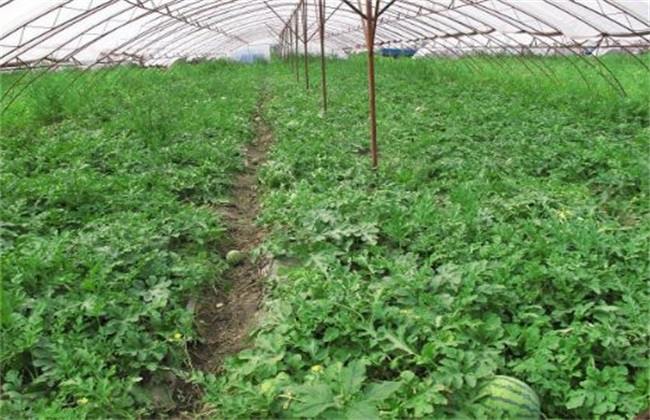
Watermelon used to be a summer fruit, but now it is all grown in greenhouses. Greenhouse cultivation artificially provides a small climatic environment with heat and moisture retention and adjustable temperature, which can be isolated from the outside climate and used for off-season cultivation, so that growing watermelons is no longer restricted by the seasons. However, the environment inside the greenhouse must be controlled by yourself, and the role of natural regulation is lost, so everything must be done carefully and meticulously. When managing the greenhouse environment yourself, you need to pay attention to the following aspects.
1. Temperature
Watermelon likes high temperatures and strong light, and grows well under such conditions; photosynthesis proceeds fully, the growth quality is better, and the yield increases. Generally, the temperature inside the greenhouse is also affected to some extent by the outside; when the outside temperature is high, the temperature inside the greenhouse rises accordingly, and when it is low, it also drops, but overall it will be somewhat higher than the outside temperature. Therefore, when the temperature difference between day and night is large, the daytime temperature will be higher than outside, and at night the temperature drops, so the skylights must be opened during the day for ventilation and cooling. At night, straw mats are added on the outside for warmth.
2. Humidity
When the temperature inside the greenhouse rises, the transpiration of watermelon accelerates, and the moisture produced condenses on the greenhouse film and finally drips down. Dripping onto the soil increases soil humidity, or dripping onto the leaves makes them prone to disease, and then transpiration occurs again, forming a vicious cycle. Therefore, generally after irrigation, when the temperature rises, the side doors are opened for ventilation to reduce humidity; there is no need to water on cloudy and rainy days, and water less on very sunny days, to avoid excessive humidity that cannot evaporate. Generally, ventilation is carried out at night and closed in the morning, and water droplets can also be scraped off manually when they form on the greenhouse film. In addition, appropriately raising the temperature can reduce humidity.
3. Light
Watermelon likes light, and sufficient light is needed to satisfy its growth. Generally, the light transmittance of the watermelon mulch film directly affects the light received; for example, if some films are more transparent, the light will be good, and if the film has poor light transmittance, its ability to receive light will also decrease. Therefore, generally a single-layer film has better light absorption, while a double-layer film reduces the light received by about 40%. In addition, when setting up the greenhouse, concrete frames block sunlight more than other frames. The construction site and orientation of the greenhouse directly affect light.
4. Air
The inside of the greenhouse is a relatively closed environment, and the air must circulate in time to ensure that toxic substances do not accumulate inside the greenhouse. This mainly involves managing the oxygen and carbon dioxide content. Generally, watermelon growth requires a large amount of oxygen, while at night watermelon releases some carbon dioxide. When oxygen is insufficient, the windows need to be opened in time for ventilation. During the day, carbon dioxide is consumed for growth, so carbon dioxide needs to be supplemented. Generally, a plastic container can be filled with some water, and then sulfuric acid is added to one third of the water volume. Place these in various places inside the greenhouse to supplement carbon dioxide.
The work to be done in greenhouse watermelon cultivation is very different from open-field cultivation. In greenhouse cultivation, temperature and humidity are the key management targets, while in open-field cultivation, fertilizer and water are the key management matters. Therefore, when growing watermelons in greenhouses, you must pay attention and do a good job in these aspects of management.