Key Points and Detailed Operation Methods of Lychee Pruning Techniques
Lychee is a fruit tree that ripens in summer, with a relatively large tree shape and many branches. After a year of growth, in order to maintain a strong tree vigor, the lychee tree can be pruned. Generally, pruning is done to change the tree structure, adjust the bearing branches of the canopy, and improve the environment inside the canopy. However, many people have the problem of not knowing how to prune, so they can pay attention to the content below in this article.
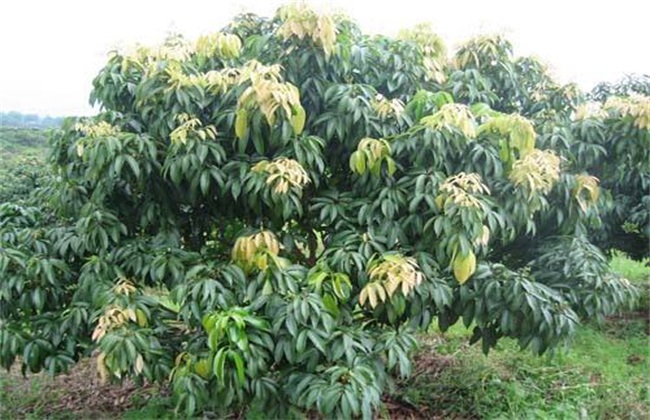
I. Purpose of Pruning
Generally, pruning is done to save nutrients, concentrate nutrients to supply high-quality and robust shoots, and promote growth. Or to concentrate nutrients to supply fruit development and balance the relationship between vegetative growth and reproductive growth. It is also done to improve the canopy structure, regulate the number and conditions of bearing mother branches and bearing branches, and ensure fruit quality. Finally, pruning maintains a sparse structure, which can reduce the occurrence of pests and diseases. In addition, some superfluous and useless leafy branches only consume nutrients and must be pruned off.
I. Pruning Time
Young trees are mainly in vegetative growth and do not bear fruit, so they can be pruned at any time of the year. However, pruning should mainly be carried out in the second year after the young tree is planted, and generally begins only when it has grown to about one-third the size of a mature tree. Pruning of young trees mainly involves cutting off diseased and pest-infested branches, thin and weak branches, dead branches and dead leaves, and then selecting and retaining side branches. Mature trees are mainly pruned after fruit harvest, when the tree body consumes a large amount of nutrients and some branches need to be pruned off to maintain tree vigor.
II. Pruning Methods
1. Young Trees
Pruning of young trees is mainly aimed at shaping and training the tree through pruning. Buds at suitable positions are selected and retained as sprouting buds, and then all other buds are removed. More sprouting buds can be retained, because after sprouting, shoot thinning will still be carried out, selecting and retaining robust new shoots to develop as side branches. Both the trunk and the selected side branches need careful pinching to remove apical dominance and limit growth to a certain height. Afterwards, the interior of the roughly formed canopy is pruned, and generally dense branches, crossing branches, overlapping branches, and thin and weak branches can be cut off. If there is pest or disease damage, the diseased branches should be cut off in time, and all pruning wounds need to be painted white to speed up healing and prevent infection.
2. Mature Trees
It is best to carry out pruning about half a month after fruit harvest. Generally, old leaves should first be cut off to improve the closed canopy and reduce nutrient consumption. Then diseased and pest-infested branches and dead branches are pruned, which can increase ventilation and air permeability inside the canopy, reduce humidity and temperature, and reduce the possibility of disease occurrence. Pruning at this time is the best time to determine autumn shoots. Autumn shoots are also the main part for restoring tree vigor. Generally, the required autumn shoots can be retained to serve as bearing mother branches for the next year, some old bearing mother branches are cut off, and all autumn shoots not retained are cut off. Generally, one to two autumn shoots are retained per branch, and attention should be paid to staggering their directions when retaining shoots. After pruning, all pruned branches should be collected and burned. Apply chemicals to large wounds for antisepsis and rapid healing.
When pruning lychee trees, it is not only necessary to prune according to tree age, but also to carry out pruning work according to different periods, different purposes, and different environments. However, when planting, pruning should be carried out based on one's own needs after comprehensive consideration.