Detailed Explanation of Guava Planting and Management Techniques
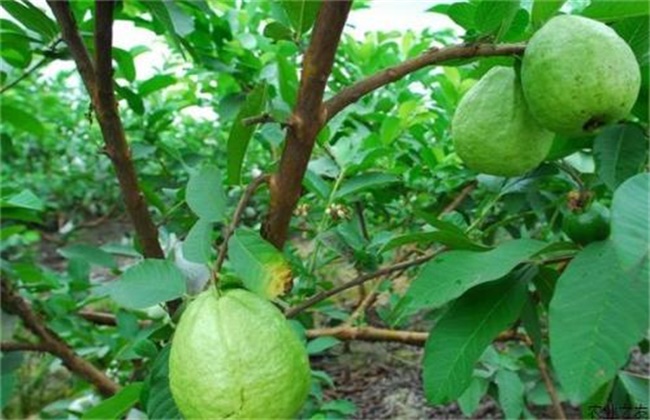
Guava is a fruit that is not very common in our daily lives, also known as the common guava (Psidium guajava). It is a fruit tree widely cultivated in tropical and subtropical regions. It is rich in nutrients and suitable for both the elderly and children to eat. Nowadays, it is also widely used in industrial processing and is a representative of a new type of fruit. Let us take a look at its planting and management techniques below.
1. Planting Environment
Most plants prefer a warm environment, and guava is no exception. Its most suitable temperature is between 20-35 degrees. If the temperature drops below zero, its young trees may freeze to death directly. It has no strict requirements for soil; it can grow normally in sandy and clay soils, but it prefers slightly acidic soil, with the soil pH best controlled between 5.5-6.5.
2. Propagation Methods
Guava has three propagation methods. One is cutting propagation: select a well-growing 2-3 year old mother plant, choose branches with a diameter of 1.2-1.5 cm, cut them into small sections about 15 cm long as cuttings, and the bottom of the cuttings can be soaked in indolebutyric acid and sucrose solution for a period of time to promote rooting. During cutting, control the temperature between 28-32 degrees, and it is best to carry out the process between February and April. The second is air layering: select a 2-3 year old mother plant, make a ring bark cut 2-3 cm wide at 50 cm from the top of the branch tip, apply rooting powder to the ring cut, then wrap it with soil. After about two months, the ring cut will take root. At this time, separate it from the mother plant and replant it. The third is grafting. Both bud grafting and branch grafting can be used, and it is best carried out in winter and spring. The scion should be selected to be suitably mature but not too old or too tender, and just peeled. Half a month before grafting, remove the leaves from the scion, cut it when it sprouts, then wrap and tie it for grafting. After one month, untie it, and after one year, plant it in the field.
3. Timely Field Planting
Field planting is generally carried out in spring. The planting density depends on the variety. If it is an early-maturing variety and the soil at the planting site is relatively poor, a plant and row spacing of about 4 m is sufficient. If it is a mid-to-late maturing variety and the planting site has sufficient fertility, keep the plant spacing at 4-5 m and the row spacing at 5-6 m. Before planting, first plow the soil, then dig planting holes and apply base fertilizer. After planting, do not forget to water with rooting water. If the seedlings have many branches and leaves, part of them can be pruned appropriately to reduce unnecessary nutrient loss. After planting, set up some support structures to prevent the seedlings from lodging due to excessive wind.
4. Daily Management
During the young tree stage, fertilization should not be too heavy. In order to cultivate new shoots, topdressing can be applied twice according to the growth of new shoots. The first time is when the new shoots grow to 40 cm, mainly applying some nitrogen fertilizer and urea. For adult fruiting trees, topdressing should be applied in stages, such as flower-promoting fertilizer, fruit-strengthening fertilizer, and fruit-preserving fertilizer, mainly based on compound fertilizer, and then adding corresponding elements according to the needs of the growth stage. Water conditions should depend on the weather. If it is the rainy season, pay attention to spraying to avoid water accumulation causing root rot. For young trees, shaping and pruning should be done well to encourage the plant to form a well-ventilated crown.
The above is an introduction to guava planting and management techniques. We hope it can help you. If you want to learn more related knowledge, please follow us.