Key Points and Methods of Grape Propagation Explained in Detail
Grapes have always been a fruit that people love, with a long history of cultivation and a rich accumulation of growing experience. But if you want to grow grapes, the first thing to discuss is still grape propagation techniques. Grape seedling reproduction takes a long time, and since the vines grow vigorously, the cutting propagation method is generally the first choice. So how should the propagation process be carried out, and what should be noted? You can keep these questions in mind as you read the content below.
I. Seedbed Preparation
First, choose a piece of land that is not exposed to direct sunlight for the seedbed. The chosen land should preferably be flat, not prone to waterlogging, and have fertile, deep soil. It is best if the previous crop on this land was not a solanaceous vegetable, and a drainage and irrigation system should be set up near the seedbed. The seedbed land needs to be given some base fertilizer in late autumn or before winter. The base fertilizer is usually barnyard manure or farmyard manure. During plowing, and after the beginning of spring, the land should be finely prepared into a seedbed.
II. Cutting Preparation
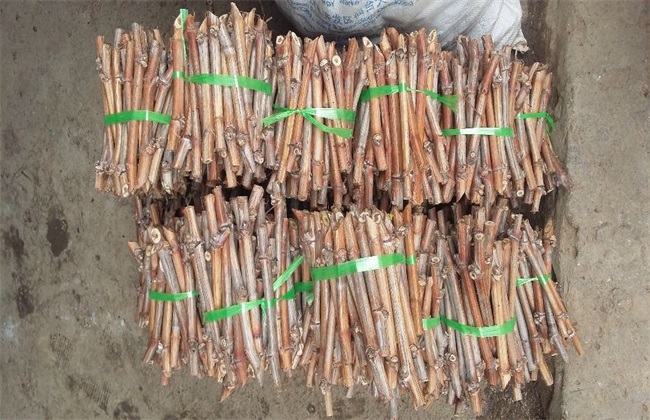
Cutting propagation generally uses hardwood cuttings, mostly using vigorous one-year-old branches, and the branches must have 2 to 3 plump buds. Generally, branches should be taken from vigorous perennial mother plants. Branches should be collected before bleeding to avoid nutrient loss. The best thickness for collected branches is 0.5 cm, as they are not too old and root easily. Cuttings are generally cut to a length of 10 cm, with the upper end cut flat 1 cm from the bud, and the lower end cut at a slant below the node.
III. Chemical Treatment
Take the prepared cuttings, tie them up, and soak them in water until they have absorbed enough water. Then use 40-50 mg of indoleacetic acid mixed with alcohol to make a rooting solution. Dip the lower cut end of the cuttings into the solution, remove them, and then insert them for cutting; they will root easily.
IV. Cutting
Cutting is generally carried out in spring, but it must be done before bleeding. In practice, it is best to cut on a cloudy, windless day. Water the prepared seedbed thoroughly and keep it moist and loose, then insert the cuttings diagonally into the seedbed, with a plant spacing of about 5 cm and a row spacing of 4 cm. After inserting them into the soil, cover the soil around the cuttings, leaving only the buds exposed, and press firmly. Finally, set up a small arched shed for shade.
The above is the main grape propagation method, the technical operation process of cutting propagation. I hope everyone can learn something useful from it and that it can provide some practical help in production.