Cultivation Methods and Key Technical Points for Japanese Apricot
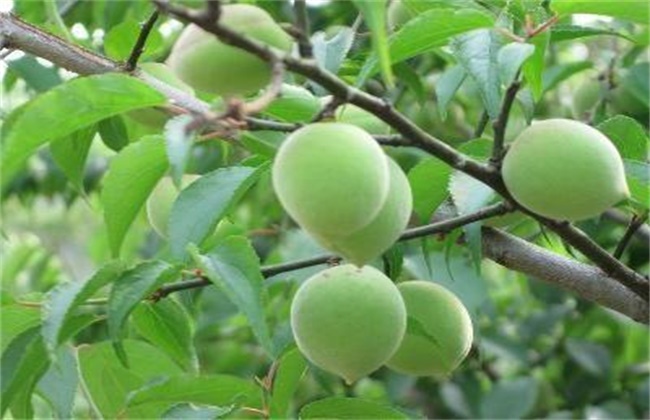
Japanese apricot is a fruit unique to southern regions, with high nutritional value. It contains health-promoting substances essential to the human body, such as organic acids, vitamins, amino acids and flavonoids, and is hailed as a health food. It also has certain medicinal value and a fairly good taste, and can treat coughs. So how should Japanese apricot be cultivated? Let's take a look.
1. Land preparation and fertilization
Japanese apricot has no strict requirements for soil and can be planted in plains and mountainous areas, and in slightly acidic or slightly alkaline land, but it is best to plant it in plots with deep soil layers, loose soil texture and good drainage. After selecting the land, plow the soil to a depth of about 60 cm, place the subsoil from the bottom layer under the sun to bake, then mix decomposed farmyard manure or compound fertilizer together, spread the mixture evenly on the ground, and then plow again. The purpose of plowing is to fully mix the fertilizer and soil. About 3000-4000 kg of decomposed farmyard manure is used per mu.
2. Planting
For plots with relatively good planting conditions, generally about 42 plants are planted per mu, that is, both the plant spacing and row spacing are controlled at 4 m, while for plots with poorer conditions, the planting density should be slightly lower, with about 55 plants per mu and a plant and row spacing of about 3×4 m. After planting, weeds should be removed frequently. Generally, weeding is carried out together with loosening the soil. Just after planting, the soil should be loosened to a slightly shallower depth to avoid damaging the root system of the young trees. Later, as the young trees grow, the depth of soil loosening can be increased accordingly.
3. Fertilizer and water management
In addition to base fertilizer, Japanese apricot also needs multiple topdressings according to its growth stages. Base fertilizer is generally applied in autumn, but no later than August, otherwise it will affect the plant's absorption of nutrients. Base fertilizer accounts for more than half of the annual fertilization amount. Before flowering, apply 1 kg of nitrogen-potassium compound fertilizer and 15 kg of high-quality farmyard manure per plant, and at the same time combine with foliar fertilizer to promote flowering. After flowering, for those with weaker growth or suffering from pests and diseases, apply some additional fertilizer, mainly phosphorus fertilizer. After fruiting, when the fruit enters the rapid growth period, apply more phosphorus and potassium fertilizer, about 4 jin per plant. After picking, apply decomposed organic fertilizer.
4. Pest and disease control
The diseases that Japanese apricot is prone to include damping-off and scab. When found, spray Bordeaux mixture at 100 times dilution multiple times continuously, or use a 800 times dilution solution of thiophanate-methyl. Common pests include aphids and cutworms. They can be controlled with pesticides or by manual capture.
The above is an introduction to the cultivation methods of Japanese apricot. I hope it can help you. To learn more related knowledge, please follow us.