A Detailed Guide to White Honeydew Melon Planting Methods and Key Technical Points
The white honeydew melon, also known as Lanzhou honey melon, originally named Wallace, is native to the United States and is a type of melon. It has thick skin, sweet flesh, abundant juice and tender texture, and is also rich in calcium, phosphorus, iron and various vitamins. It stores well and is deeply loved by consumers. It is now widely cultivated across the country. Below, the editor will introduce the planting techniques for white honeydew melon.
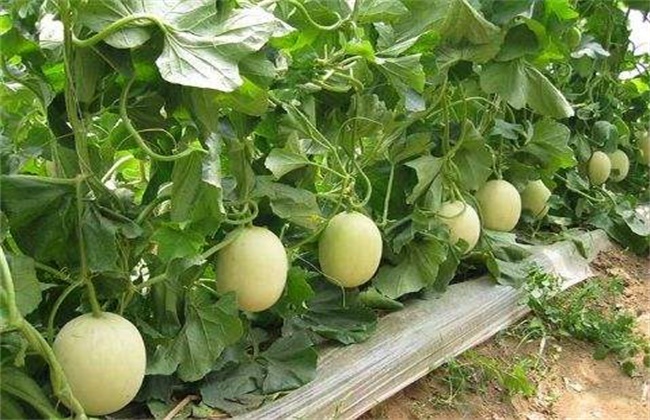
1. Land preparation and fertilization
It is advisable to choose sandy land with an open terrain and favorable climate as the cultivation site, and to plow and harrow carefully. Apply 2000 kg of decomposed high-quality farmyard manure, 25 kg of diammonium phosphate, and 100 kg of oil residue or bean residue per mu as base fertilizer. After application, level and compact the soil, cover with sand and gravel, then spray with enough water and set aside for later use. If a double-covering cultivation technique using small row tunnels plus plastic greenhouses is adopted, it has the advantages of earlier market availability and better quality, and can also effectively avoid the peak period of diseases and increase economic returns. The span and length of the greenhouse depend on the plot. Generally, the greenhouse should be covered 7-10 days before sowing to help the low temperature rise.
2. Sowing and seedling raising
Sowing is best done in early March. First, carry out seed soaking and germination. Wrap the seeds in gauze and soak them in warm water at 55 degrees. After the water cools naturally, continue soaking for 12 hours. Then rinse them clean with fresh water and place them under a constant temperature of 25-30 degrees for germination. Once the standard is reached, sowing can begin. Generally, sow two seeds per hole, with plant and row spacing controlled at 75×85 cm, and about 1300 plants per mu. Immediately after sowing, build small row tunnels inside the greenhouse along the sowing rows, and pull the film tight and press it down firmly. After emergence, ventilate promptly as the seedlings grow, and keep the temperature inside the small row tunnels at 30-32 degrees. When the seedlings grow to 5 true leaves, the small row tunnels can be gradually removed.
3. Field management
For greenhouse cultivation, use the 3—2—1 pruning method on secondary vines. During the flowering period, use artificial supplementary pollination to ensure normal fruit set and improve the fruit-setting rate. Pollination is generally carried out in the morning. At this time, the daytime temperature should be controlled at 30-35 degrees, and the nighttime temperature should not be lower than 15 degrees. The timing of ventilation should be determined according to the growth stage of the white honeydew melon and the weather. As the seedlings grow and the temperature rises, ventilation volume can be increased and ventilation time extended. After fruit set, in order to promote fruit enlargement and sugar accumulation, increase ventilation during the day and close the greenhouse at night. In case of cloudy and rainy days, pay attention to extending ventilation time to reduce humidity inside the greenhouse.
4. Pest and disease control
Common diseases of white honeydew melon include damping-off, gummy stem blight, and powdery mildew, and targeted control measures should be taken. For damping-off, the main goal is to cultivate strong seedlings and practice crop rotation to improve plant resistance. When the disease occurs, spray the roots with dexon solution for control. For gummy stem blight, once diseased plants are found, promptly spray the whole plant with mancozeb, once every 5-7 days, or apply 100-fold formalin solution to the diseased areas, which gives a good effect. For powdery mildew, once found, promptly spray carbendazim or thiophanate-methyl solution over the whole area, or spray triadimefon for control. The main pest is aphids, which can be controlled with aphid-killing smoke agents, or sprayed with 1000-fold dimethoate solution.
The above is an introduction to white honeydew melon planting techniques. I hope it can help you. To learn more related knowledge, please stay tuned to us.