Detailed Explanation of Management Techniques for Sapphire Grapes at Each Growth Stage
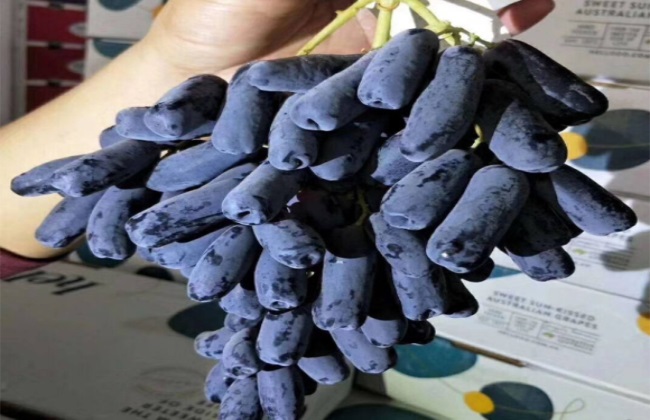
Sapphire is a new grape variety whose quality and appearance are both different from ordinary grapes. Because of people's curiosity, it became very popular as soon as it hit the market. As a result, more and more people are growing Sapphire grapes, and its planting area is naturally growing larger and larger. When growing Sapphire grapes, management methods are very important, and each stage has different management points. Below, the editor will give you a brief introduction.
1. Bleeding stage
Every spring, when the soil temperature rises to around 7-8 degrees, the roots of the grapevine gradually regain their vitality and begin to absorb nutrients. Then they transport the nutrients to the aboveground parts of the plant, promoting the grapevine to sprout branches and buds. However, because the vessels in the stems and vines of Sapphire grapes are thick and relatively loose, when sap activity is strong, if there is a wound on the plant, the sap will flow out from the wound. This is the bleeding stage of Sapphire grapes. Therefore, during the bleeding stage, we must strengthen management, not allow the tree to develop wounds, try not to do pruning work, and do a good job of loosening the soil and weeding to prevent bleeding.
2. New shoot growth stage
The new shoot growth stage generally runs from when the grapevine's buds grow until the initial flowering stage, with a total duration of about 35 days. When the average daily temperature remains above 10 degrees, the buds of the Sapphire grapevine begin to sprout, and after about half a month, the growth rate of the new shoots speeds up and enters the full flowering stage. Because at this time all the organs of the Sapphire grape are in a vigorous period, which is key to the yield of that year, we must do a good job of fertilizing and control the proportions of nutrients such as nitrogen, phosphorus, and potassium. In order to prevent excessive nutrient consumption, we must also do a good job of bud fixing and bud removal, and reasonably adjust the load of the grapevine.
3. Flowering stage
The flowering stage of Sapphire grapes is relatively short; from the first flowers to the end of flowering, the longest period is only about half a month. When the temperature rises to around 25 degrees, it is the most suitable temperature for Sapphire grapes to flower. If the temperature is below 15 degrees, then the flowering and fertilization rate will be reduced. Therefore, during the flowering stage, we should appropriately apply fertilizers such as fulvic acid to increase the fertilization and fruit-setting rate. And during the flowering stage, we must also do a good job of tying the vines and removing shoots. Improve field ventilation and light penetration, promote flowering, and for some flower clusters with poor pollination, carry out artificial pollination.
4. Berry growth stage
When the grape berry ovary begins to expand, it enters the berry growth stage of Sapphire grapes. This period continues until the berries change color and soften. During this period, Sapphire grapes have a relatively large demand for nutrients. Therefore, we must increase the nutrient proportions, not only increasing basic nutrients such as nitrogen, phosphorus, and potassium, but also promptly supplementing various trace elements such as calcium and boron. We should also appropriately spray foliar fertilizer to enhance the photosynthesis of the leaves, increase nutrient accumulation, promote fruit expansion, and improve berry quality.
The above is a brief introduction to the key management points for Sapphire grapes at each growth stage. The management work for Sapphire grapes is very important, and the quality of management directly affects the yield, so everyone must pay close attention! That is all for today's introduction. This article is for reference only, and I hope it can help everyone!