Field Management Methods and Technical Key Points for Sapodilla
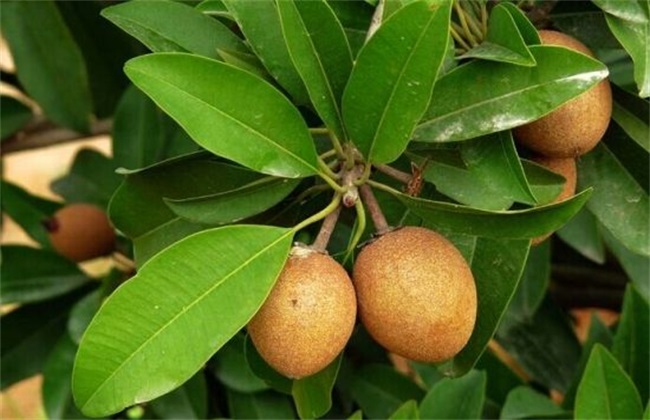
Sapodilla is a tropical fruit native to the Americas, and in recent years it has also appeared on the market. It has become popular among people, and it is named sapodilla because its shape resembles a human heart. Because of its high nutritional value, people have begun to cultivate it, but some friends also want to grow it themselves and are troubled by a lack of experience, so today I will briefly introduce some of what I know.
I. Soil
The soil is required to have a sound structural layer, and the plow layer and permeable layer must not be damaged. Generally, fertile, loose, deep soil is needed. If conditions are limited, the soil can be improved, mainly by applying decomposed manure to improve poor fertility, by intertillage to improve compaction, by digging ditches and forming ridges to drain water and solve waterlogging, and by mixing in sand to improve permeability. In this way, the soil can be used for cultivation.
II. Water Control
It likes a humid environment and needs environmental humidity somewhat higher than that of other fruit trees, but water must not accumulate. If the roots are waterlogged, growth is endangered, root rot occurs, and growth stops and the plant dies. Watering is needed most during the flowering and fruiting period. During the earlier period of normal leaf growth, small amounts of water applied frequently are enough to keep it moist. After the fruit begins to color, do not water, to avoid excess moisture. After harvest, one heavy flood irrigation is needed to replenish what was consumed.
III. Fertilization
In spring, when new shoots sprout, a large amount of nutrients is needed, so some quick-acting nitrogen fertilizer can be applied as a topdressing to make the branches and shoots grow rapidly. This promotes more new shoots and enlarges the canopy. For adult trees that can bear fruit, shoot-promoting fertilizer can be applied as a topdressing in the third year. When the fruiting period arrives, more phosphorus and potassium fertilizer can be applied, or farmyard manure, plant ash, and the like, to provide nutrients for the entire fruiting period.
This ensures the nutritional needs of the fruit. After harvest, fertilizer should be applied to replenish the tree's nutrients; half of the base fertilizer for the following year can be applied, and this can also be regarded as a kind of bottom fertilizer. Fertilization can raise the temperature and help the tree overwinter safely.
IV. Temperature and Light
Sapodilla likes a high-temperature environment. The suitable temperature for growth is 22 to 30 degrees, and in winter it can tolerate low temperatures of 2 to 3 degrees. Large trees will be harmed at a low temperature of minus 2.2 degrees, and a few hours at minus 4.5 degrees Celsius will cause severe freezing damage. Seedlings will freeze and die at minus 1 degree. It cannot tolerate strong direct sunlight very well, and generally needs to be grown under shade netting; otherwise, it easily drops flowers and fruit. On cloudy days, the shade netting can be removed.
At present, experience in growing sapodilla is not as extensive as experience in growing other fruit trees. However, some basic requirements are shared in common. Therefore, generally, as long as the adjustment work for the requirements above that all fruit trees need for growth is done according to its characteristics, good growth should be ensured.