Key Points and Correct Methods of Banana Fertilization Explained
Banana is a large herbaceous fruit commonly cultivated in tropical regions. It mainly relies on suckers sprouting from the rhizome to continue propagating. Fertilization is of paramount importance when planting bananas. Bananas have high requirements for soil properties, and not only is the demand for fertilizer high, but fertilizer is also the main condition for improving soil properties. So today I have decided to specifically discuss how to fertilize bananas, thereby improving the soil and allowing bananas to grow better.
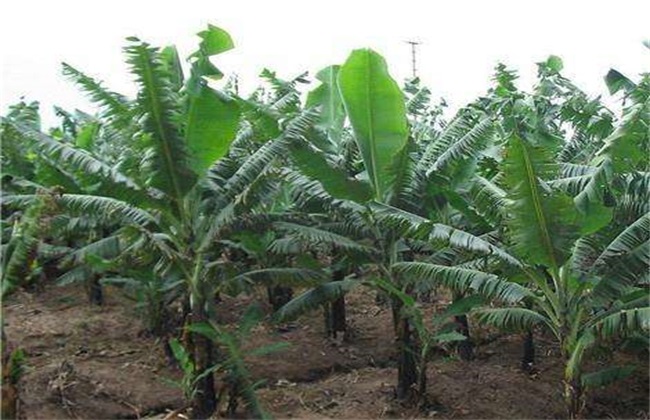
I. Nutrient Requirements
Most of the banana root system consists of fibrous roots, with no taproot. All roots penetrate the soil to roughly the same depth, so they form a horizontal root distribution plane. Therefore, fertilizer should not be applied too deep; a depth of about 10 to 15 cm is sufficient. Since they are all fibrous roots and roots continue to grow after budding, the fertilizer concentration should be low to avoid damaging the roots. Generally, mild fertilizers are best, preferably mixed with water and applied as a solution. In terms of fertilizer use, potassium fertilizer is the most needed, followed by nitrogen fertilizer, with calcium, magnesium and phosphorus roughly equal in amount.
II. Fertilization
1. Base fertilizer
For base fertilizer, compound fertilizer can generally be used, or a custom-formulated compound fertilizer can be applied, with trace fertilizers such as calcium, magnesium and phosphorus added. It is usually applied in holes, or a trench can be dug beside the plants for application. Apply about half a jin per plant; for trench application, calculate how many plants are in a row and evenly spread the fertilizer in the trench. The depth should be about 7 cm. It must be mixed with soil when applied so as not to damage the roots.
2. Peak vegetative growth stage
Fertilize during the vegetative growth stage, roughly when the plant has about 30 leaves. This is the period of vigorous plant growth, requiring heavy fertilizer to promote plant growth and leaf development, laying the foundation for flower and leaf differentiation. At this time, a large amount of farmyard manure needs to be applied to provide continuous nutrition.
3. Flower bud differentiation stage
Roughly when the plant has more than 30 and about 40 leaves. This is an important period for flower bud differentiation. At this time, a large amount of nitrogen is needed. If it is not supplemented, the nitrogen content in the leaves and stems will be converted to supply the growth of the flower spike. Therefore, sufficient nitrogen fertilizer must be supplemented in time, so that the leaves can maintain normal photosynthesis to supply nutrients.
Bananas need a lot of fertilizer, but their root system is weak. Apart from a few important periods, fertilization generally follows the method of applying thin fertilizer frequently. No matter how good the fertilization is, it must be combined with irrigation. This is beneficial for absorption without damaging the roots. Be sure to do this series of work well, and the yield will be guaranteed.