How to prune pear trees? Detailed explanation of pruning technique key points
Pear varieties cultivated in the past generally had relatively tall tree forms, with thick and tall trunks, and usually only dead branches needed to be removed to maintain a certain good tree shape. Now, for the convenience of harvest and management, the varieties being vigorously promoted for planting are all dwarf varieties with less obvious trunks. Therefore, it is necessary to cultivate a well-fixed tree shape that is convenient for management and growth. So below we will talk about how to do this pruning and what shape is suitable to set.
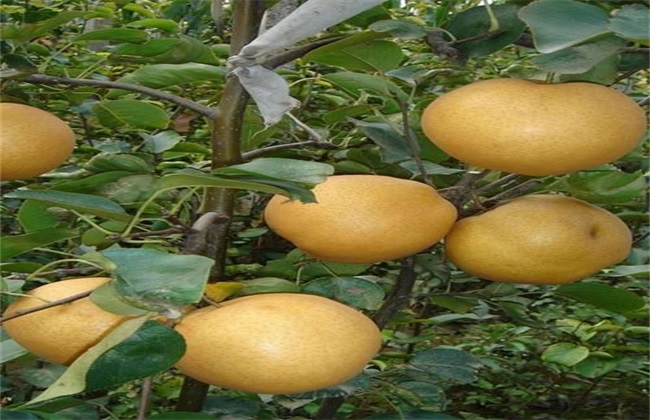
I. Purpose of pruning
If the tree shape is open and no trunk heading or branch retention pruning is done, then nutrients cannot be transported to the outer periphery, and it is always difficult; the outer periphery bears poor fruit, and looseness causes the interior to become hollow, branches droop low, and fruits cannot receive good light and drop. If leaves and fruits are too close to the ground, they are likely to receive excessive humidity, and the interior being closed and shaded makes them prone to diseases and pests. If the trunk has no canopy shade, it will be sunburned and lose water, and in severe cases die. In winter, rain and snow pressing down can easily break branches and cause frostbite to the trunk. Without pruning, the canopy is not attractive and management is inconvenient.
II. Pruning methods
Pear tree pruning mainly serves shaping and form setting, and the main pear tree forms are two types, mainly the open-center layered form and the multi-main-branch natural form. Each of the two tree forms has its own advantages and disadvantages; it only depends on which advantages the grower values more. However, diseased and pest-infested branches, weak branches, and overly dense branches are pruned the same way.
1. Open-center layered form
First determine the trunk. Generally, the trunk should be about 1 m above the ground, then among the branches that sprout and grow out at 1 m, retain three robust side branches. The three side branches should grow staggered, not in the same direction. Then remove all the sprouted branch tips and leaves on the trunk, and on the three side branches respectively continue to retain three to four fruiting mother branches, and remove all the remaining branches. Finally, on the fruiting mother branches, select and retain 5 to 7 fruiting branches, and after cutting off the remaining weak branches, it is completed. After side branches, fruiting mother branches, and fruiting branches are selected and retained, pinching should be carried out to avoid excessive vegetative growth, accumulate nutrients, and promote new branches.
2. Multi-main-branch natural form
Head the trunk at half a meter, but do not make the heading too obvious. After heading, let it grow naturally, then choose all robust branches to retain and cut off the rest. This forms multiple main branches. On the main branches, also retain only robust branch tips as fruiting mother branches, and on the mother branches likewise remove weak fruiting branches. In this way, natural pruning can be maintained, but the retained branch tips also need pinching. Pruning in this way can set the form.
The above are the pruning techniques and methods for pears, mainly carried out around shaping, but specifically there are also some detailed operation contents such as branch pruning and shoot thinning, pinching and bud removal, and short cutting for rejuvenation, carried out together, and pear tree pruning should be done according to one's own actual situation.