Detailed Explanation of Key Technical Points for Waxberry Cutting Propagation
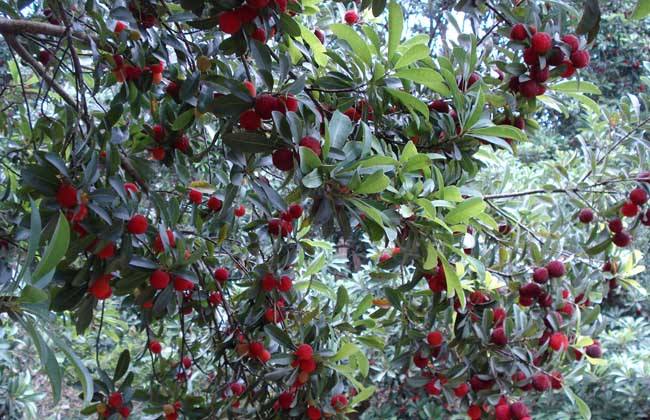
Waxberry (Morella rubra, Chinese bayberry) is a small tree fruit with high edible value, mainly planted in the southern provinces, and historical findings show that waxberry cultivation dates back several thousand years. Planting first requires raising seedlings, and the seedlings are then transplanted to complete the planting process. So how should cutting propagation be carried out, what issues need attention, and what preparatory work should be done. In the following content, all of this will be explained clearly.
I. Preparation for Cuttings
Waxberry cutting propagation is the main method for rapidly propagating waxberry seedlings in large quantities. The time to obtain seedlings does not involve the long waiting period of sowing, and the survival rate is also higher than that of grafting propagation. Therefore, when large-scale planting is needed and the sowing time has been missed, this propagation method is chosen. First, cutting propagation requires a large number of strong one-year-old or two-year-old fruiting branches, preferably with plump buds. In addition, skilled workers are needed to prune the branches. It is also necessary to prepare some clean buckets and purchase enough rooting powder. Furthermore, small arched sheds need to be built for cutting management; if conditions permit, this can be done in a greenhouse, and drip irrigation facilities should be installed.
II. Cutting Method
For cuttings, generally the collected branches must first have two-thirds of their leaves trimmed off, and only then should the branches be cut into approximately 10 cm long pieces with a flat top end and a slanted bottom end. Trimming the leaves and making the flat cut is to reduce transpiration, while the slanted bottom end is to maximize contact with the soil and produce more roots. Then place the cut branches uniformly into a bucket containing a rooting powder solution and soak them for half an hour. You can roughly keep track of the time; it is best to put branches cut at the same time into the same bucket. This avoids confusion and soaking for too long. When inserting the cuttings, first use a branch about 0.5 cm thick to poke a small hole about 6 cm deep in the seedbed, then put the branch in and gently press the nearby soil so that the branch and soil are tightly combined. Be careful not to force the branch directly into the soil, as this easily damages the branch; if the bottom cut becomes fuzzy, it will be difficult to root. Therefore, before inserting the cuttings, the soil must be watered thoroughly. Cuttings should not be too dense; generally the plant spacing is about 3 cm and the row spacing is about 5 cm.
III. Cutting Management
After cutting, small arched sheds should be built promptly to keep warm and moist, and the temperature and humidity can be adjusted manually. Generally, on hot days, the two ends can be kept closed to isolate outside heat. In the evening, ventilation should be carried out promptly to avoid suffocating the seedlings. On cloudy days, appropriate ventilation can be given, but in low-temperature weather ventilation should not be done until the temperature rises, and then ventilation should be gradually introduced. A shade net should be covered over the small arched shed to block strong light, reduce transpiration, and avoid water shortage. Because there are no roots in the early stage, it is essential to water once in the morning and once in the evening every day to maintain a moist soil environment. There must be no dry conditions. However, in the later stage, the amount of watering can be gradually reduced until, when the cuttings have fully rooted and survived, watering can be stopped. Finally, the seedlings can be lifted. Three days before lifting the seedlings, apply a light fertilizer solution once to thoroughly water the seedbed to avoid damaging the roots when lifting the seedlings.
The above is all about the waxberry cutting process, with some precautions for the preparation work interspersed throughout, so in actual production, special attention must be paid to operations in these aspects. However, in different regions, the planted varieties are different and the environments are also different, and all of these need to be included in the specific implementation considerations for cutting propagation.