What are the reasons for the low survival rate of bayberry (Myrica rubra)?
Bayberry has relatively high economic benefits, which attracts fruit growers to plant it on a large scale, but during the planting process, the problem of a low survival rate in bayberry planting often causes certain economic losses to fruit growers. So what factors affect the survival rate of bayberry? How can the survival rate of bayberry be improved? Let's take a look.
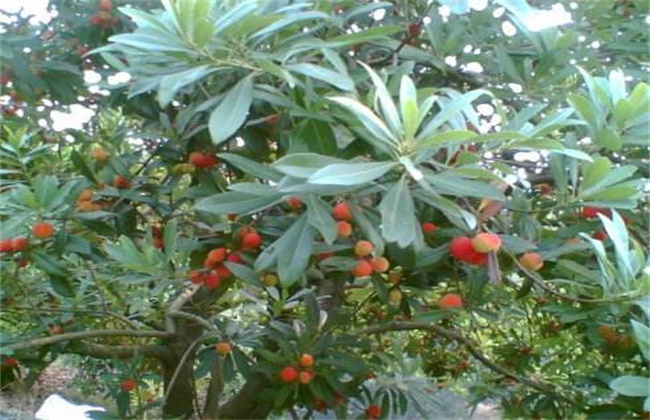
I. Reasons for the low survival rate
1. Substandard seedlings
The young trees selected for planting are substandard, mainly because the plant root system has shrunk and is underdeveloped, making the plant thin and weak. If moisture is not kept properly during the planting and transplanting process, dehydration is very likely to occur, and even after planting it is extremely difficult for the plant to survive. In addition, the seedlings have relatively many leaves on top, and under photosynthesis and transpiration they will become dehydrated, so attention must be paid during planting.
2. Improper planting
The planting process of bayberry is the process of securing it in place, and at this time many issues require attention during planting, as the slightest carelessness may lead to the death of the seedlings. If planting is too shallow, the surface soil coverage rate is low, while the photosynthesis and transpiration of the bayberry plant proceed normally, resulting in severe water deficiency in the plant, which causes it to lose its drought resistance. This is also an important reason for its low survival rate.
3. Insufficient water
After planting, monitoring of water must not be relaxed either. In many mountainous and hilly areas, the terrain has strong drainage, so water must be replenished in time according to the temperature. When the temperature is relatively high, the transpiration of the plant intensifies, and insufficient water will cause the plant to die from water deficiency, so it needs to be watered in time to ensure its normal growth.
II. Measures to improve the survival rate
1. Select superior plants
When planting, choose high-quality bayberry plants, selecting plants with well-developed root systems and thick, strong roots and stems for planting, so that they will not be thin and weak when established. During the planting and transplanting process, work to reduce water loss from the plants; the number of leaves on the plant can be reduced to a certain extent to reduce transpiration, or plastic wrap can be used to secure the plant root system to reduce water loss.
2. Choose a suitable planting time
The climate for establishing bayberry should not be too hot or too cold. The best time for establishment is February to March, and choosing a rainy, overcast day for planting will reduce the transpiration of the plant and improve the survival rate.
3. Selection of the planting site
Bayberry likes heat and moisture and prefers acidic soil, so when planting, try to choose northern mountainous and hilly areas with loose, fertile acidic soil.
4. Create a good ecosystem
When planting, manage the density of the surrounding vegetation so that air density and humidity are relatively uniform, improving permeability and reducing pest and disease infection to a certain extent. It can also stimulate the bayberry to compete with surrounding plants for nutrients, thus making the bayberry fruit trees tall and upright, which is beneficial to yield and quality.
5. Pest and disease control
Pests and diseases are important factors harming the improvement of the bayberry survival rate and plant quality. The types of pests and diseases are diverse, and the control methods differ, so in order to improve the survival rate, targeted control must be carried out for different conditions.
The above is an introduction to the reasons for the low survival rate of bayberry. We hope it can help you. To learn more related knowledge, please stay tuned to us.