What to Do About Herbicide Damage in Fruit Trees? Symptom Identification and Remedial Measures
Fruit is a common food in our daily lives and one of the sources of supplemental nutrients. However, during fruit tree cultivation, pest and disease damage is unavoidable, and many fruit growers use pesticides to control it. Improper use of pesticides inevitably leads to herbicide damage. Below, let's take a look with the editor at the remedial measures after herbicide damage in fruit trees.
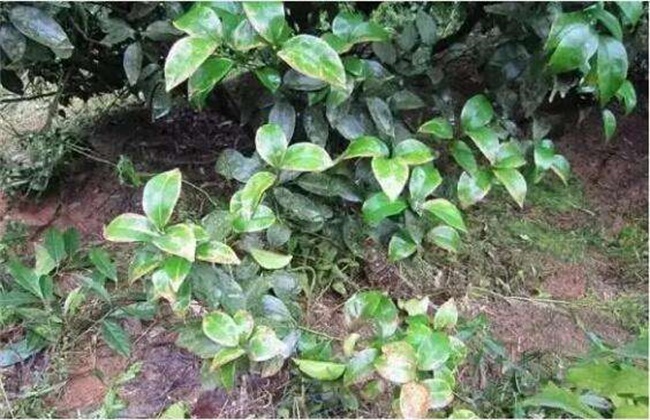
1. Herbicide Damage Symptoms
The symptoms of herbicide damage differ depending on the part of the fruit tree affected. When buds suffer herbicide damage, they cannot sprout normally, and in severe cases the buds turn black and die. When leaves suffer herbicide damage, within 1-2 days round or irregular red spots appear on the leaf surface, and the leaf tips and margins turn brown and dry up; in severe cases the entire leaf becomes bitter and drops off. After 5-7 days, yellowing symptoms appear on the leaf surface, and in severe cases the entire leaf changes color and drops off. When fruit suffers herbicide damage, within 3-5 days red or brown spots appear on the fruit, and as the fruit develops these form large patches. After 5-7 days following herbicide damage, young fruit drops off in large numbers, and in severe cases all fruit on the tree drops off. If herbicide damage occurs in July-August, the fruit develops rust-colored spots or forms mottled fruit, seriously affecting fruit quality. When branches and trunks suffer herbicide damage, the phloem of the trunk turns brown, and in severe cases this extends to the remaining branches and trunks. After 5-7 days the leaves of the whole tree turn yellow and drop off or become scorched and dry; in mild cases some branches die back, and some affected branches and trunks can recover and grow new leaves.
2. Causes of Herbicide Damage
The main causes of herbicide damage in fruit trees are related to factors such as pesticide quality, method of use, fruit tree variety and climate. Poor pesticide quality, such as expired products, is very likely to cause herbicide damage. Excessive pesticide use, including too high a concentration or repeated spraying, can very easily cause herbicide damage. Improper pesticide use, such as mixing two or more pesticides that then undergo a chemical reaction, greatly reduces efficacy and may also cause herbicide damage. The environment is also one of the important causes of herbicide damage; for example, after spraying, if the spray solution is exposed to rain before it dries, or if the temperature is too high, these can all cause herbicide damage in fruit trees.
3. Remedial Measures
If herbicide damage in fruit trees is discovered early, the plant should be promptly washed by spraying water, so as to dilute the pesticide on the leaves and branches and reduce the pesticide content in the tree; the earlier this method is discovered and applied, the better the effect. If the herbicide damage is caused by soil application, drainage and irrigation washing measures can be used: first flood the orchard with a large or small amount of water to wash away residual pesticide on the ground, then drain promptly. Spraying to neutralize the herbicide damage is also possible; depending on the herbicide damage caused by each agent, the corresponding relief substance can be sprayed to neutralize it. For example, for herbicide damage caused by Bordeaux mixture, low-concentration lime water can be sprayed to eliminate the toxicity; for herbicide damage caused by lime sulfur mixture, after washing, rice vinegar solution can be sprayed to reduce the herbicide damage. After fruit trees suffer herbicide damage, fertilizer should be applied promptly to promote recovery of tree vigor. If the herbicide damage is caused by acidic agents, plant ash or quicklime can be spread; for herbicide damage caused by alkaline agents, ammonium sulfate can be applied. Regardless of which agent caused the herbicide damage, a mixed solution of 0.3% urea solution plus 0.2% potassium dihydrogen phosphate can be sprayed to reduce the herbicide damage.
The above is an introduction to fruit tree herbicide damage symptoms and remedial measures. We hope it helps you. To learn more related knowledge, please stay tuned to us.