What precautions should be taken when spraying fruit trees in summer?
The high temperature and high humidity of summer easily cause fruit tree pests and diseases to spread and run rampant, and summer is also a period when fruit trees are sensitive to pesticides. Once the pesticide concentration is too high or the spraying method is improper, it can very easily cause pesticide damage. So what should be noted when spraying fruit trees in summer? Let's find out together.
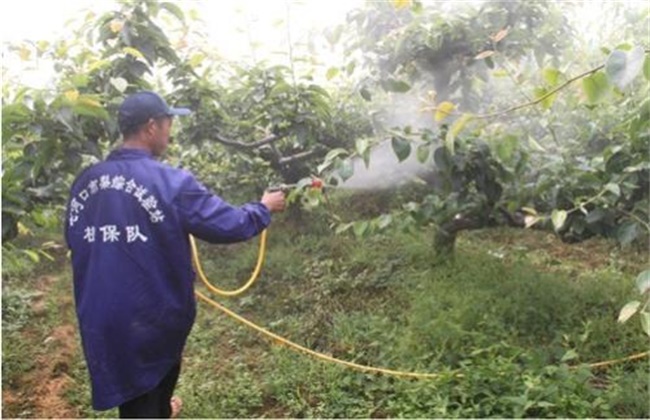
1. Spraying time
Many fruit growers believe that the higher the temperature, the better when spraying, but this is not the case. When spraying under high temperature and strong light, most pests will stop activity and hide in shady places, making it unlikely for the pesticide to reach them, and the pesticide volatilizes quickly under high temperature and its potency breaks down quickly, so spraying at this time will reduce the effectiveness. In addition, when spraying under high temperature, because the pesticide is highly volatile, it can very easily cause poisoning among the spray operators. Many fruit growers also like to spray in the cool morning, but at this time the dew has not dried, and after spraying the pesticide will be diluted by the dew, reducing its effectiveness and resulting in poor control results. The correct spraying time is from 9-10 am or after 4 pm. These two time periods avoid both the dew and the high temperature period, and the spraying effect is best.
2. Pesticide concentration
The concentration of the pesticide must be well controlled. During the fruit tree growing season, fruit trees are relatively sensitive to pesticides. Too high a concentration easily causes pesticide damage, while too low a concentration reduces the control effect, so the mixing concentration of the pesticide must be strictly controlled. According to the sensitivity of fruit trees to pesticides, reasonably determine the type and concentration of the pesticide to use. For example, Bordeaux mixture is often used on apples, pears and grapes, but peach trees are relatively sensitive to it, so it is generally not used on peach trees. There are many more cases like this, so before use you should understand their characteristics and mix them reasonably.
3. Spraying operation
Summer is hot and scorching, and many spray operators, just to enjoy a moment of coolness, take no protective measures at all when spraying, and some even go shirtless, which very easily leads to pesticide being absorbed through the skin and causing poisoning. Therefore, when spraying, wear protective clothing and a mask, and after spraying, wash the whole body to avoid pesticide poisoning. When spraying fruit trees, be sure to spray evenly and thinly. In summer, fruit trees have luxuriant branches and leaves, and pests are well hidden. At this time, spraying must be uniform, so that both sides of the fruit and leaves are covered with the pesticide, and according to the growth habits of the pests, concentrate spraying for control on the places where they live.
4. Pay attention to pesticide resistance
When spraying pesticides, scientifically rotate the types of pesticides and mix pesticides, and at the same time add Texiaowang to the liquid to improve the effectiveness, avoid continuous use of the same pesticide causing pests and diseases to develop resistance, and also avoid losing effectiveness after rain.
The above is an introduction to the precautions for spraying fruit trees in summer. We hope it can help you. To learn more related knowledge, please stay tuned to us.