Detailed Explanation of Citrus Grafted Seedling Breeding Methods and Technical Points
Citrus is widely cultivated in the south, with a great many varieties, and it is an important source of income for farmers in many regions. Citrus propagation and seedling methods include grafting, seedling growing, cutting, layering, and so on. Generally, in actual production, these methods are often used. Below is mainly an introduction to the propagation of grafted seedlings and how to carry it out.
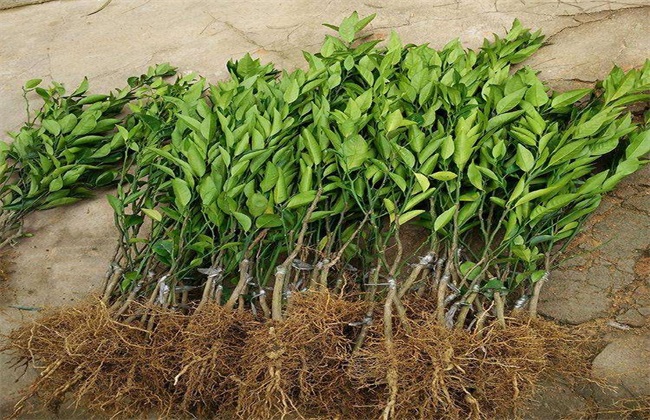
I. Seedling Raising Time
Grafting is carried out in spring, when the survival rate is relatively high, because for both the rootstock and the scion this is a suitable time in terms of weather, temperature and humidity. Of course, it can also be done secondarily in the cool autumn "little Indian summer," but the survival rate will be somewhat lower.
II. Grafting Preparation
For rootstock, sour pomelo, sweet orange, trifoliate orange (Poncirus trifoliata) and others can generally be used, but at present trifoliate orange is mainly used. This is because trifoliate orange has extremely strong cold resistance and fairly strong adaptability and disease resistance. Therefore, it is necessary to buy enough rootstock seedlings in advance, or dig up wild trifoliate orange seedlings. Trifoliate orange or other rootstock seedlings can be planted in large quantities at home for use. For the scion, choose healthy, strong mother plants and take 10 to 15 cm healthy one-year-old or two-year-old branches; the branches must have sufficiently plump buds. Cut off the branches and remove the leaves.
III. Grafting Methods
After preparation, first cut the rootstock short at 5 cm above the ground, then leave one cut surface. On the epidermal layer of the cut surface, cut downward about 2 cm along the phloem, then make one slanting cut at the base of the scion to produce a smooth slanted surface 1.5 cm long. Then insert the scion into the bark layer of the rootstock, with the slanted surface pressed tightly against the rootstock. Finally, wrap it round and round with transparent tape or plastic film, generally with suitable tightness, and it is best to leave room for growth. The whole process must be done quickly, and after about half a month the survival can be checked. If the scion withers, the grafting has failed. If it fails, it can be re-grafted in time by making a cut on the other side of the rootstock and selecting a new scion. However, seedlings after re-grafting can be given special care. Generally, grafted seedlings should be planted in shaded land, covered with shade netting, and watered frequently to keep them moist. Then, after normal growth, they are transplanted, generally after one to two months. The transplanting site needs sufficient base fertilizer and thorough watering. Pesticides should be spread to prevent and control diseases.
Compared with other propagation methods, grafted seedlings are a relatively superior propagation method, because they can make good use of the superior traits of the rootstock, such as disease resistance and adaptability, to make up for the shortcomings of the scion variety and change the plant's advantages and growing conditions, so this method is often used in production.