Detailed Explanation of Key Points and Methods of Cherry Fertilization Techniques
Cherry is a fruit that many people greatly enjoy, and its market value is very good. To grow cherries well and have them look beautiful, controlling fertilizer and water management is very important. Some inexperienced growers generally do not know how to coordinate the relationship between the growth cycle and fertilization. So exactly when should fertilization be done, what effect does it have, and how should it be applied?
I. Fertilizer Requirements
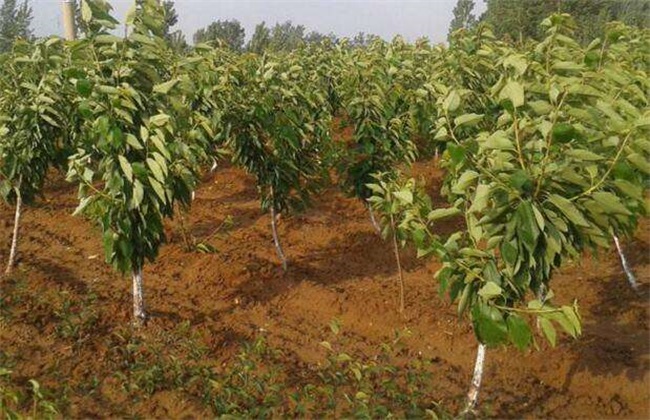
The root system of the cherry tree is mainly distributed in the 15 to 25 cm soil layer, and the main root does not penetrate deeply, so fertilization does not need to be applied too deeply. The root distribution is mainly within the tree canopy, so when fertilizing, apply fertilizer along the canopy drip line. Generally, fertilization is carried out before bud break, before shoot emergence, and during the fruiting stage, coloring stage, and after harvest in combination with orchard cleaning.
II. Fertilization Techniques
1. After autumn harvest and before bud break, apply base fertilizer. Generally, for small trees, apply fertilizer about 50 to 60 cm from the trunk. For large trees, apply fertilizer about 1 m from the trunk. When fertilizing, do not dig into thick roots or damage the root system. The usual application rate is about 500 jin per mu of fully decomposed farmyard manure or fallen leaves, mixed with soil and fertilizer. Generally, dig trenches on both sides between the rows and apply fertilizer.
2. After germination and during shoot emergence, most branches and shoots are usually removed and only vigorous shoots are retained, so before this, a quick-acting compound fertilizer can be applied as a topdressing to promote germination and shoot emergence, but after shoot emergence the fertilization rate can be appropriately reduced. At this time, the method of directly digging trenches around the tree canopy is generally used, which facilitates absorption and utilization. About 100 per mu of chemical fertilizer is applied.
3. From flowering to fruiting is the key period that determines cherry yield. Generally, during flowering, growth regulators can be sprayed to protect flowers and fruits. But fertilization is certainly important. A hole can be dug under each tree and fertilizer applied, generally using urea, superphosphate, potassium oxide and other fertilizers in combination. The application rate per mu is about 100 to 200 jin. It cannot be too little, as too little is not enough for absorption. When applying, mix with water, as this makes rapid absorption and results easier.
4. After fruit set, if the fruit is to change color and ripen, it needs a large amount of nutrients. At this time, more nitrogen fertilizer can be applied, which is beneficial to leaf growth and helps produce a certain amount of photosynthetic products and nutrients to supply the fruit. At the same time, a certain amount of phosphate fertilizer also needs to be added to promote ripening. At this time, weeds in the orchard can be composted and decomposed into fertilizer and buried in the soil to provide nutrients. This includes that after harvest, dry branches and fallen leaves in the orchard can be dried and burned into plant ash to be used as fertilizer and buried under the trees, used to protect against cold and strengthen roots.
When fertilizing cherries, be sure to pay attention to the different application rates and methods at different stages, and different varieties also have different fertilizer requirements. Fertilization and topdressing must be carried out according to the characteristics of the plant to help the growth and development of cherries.