How to prevent watermelon fruit cracking? Introduction to practical methods
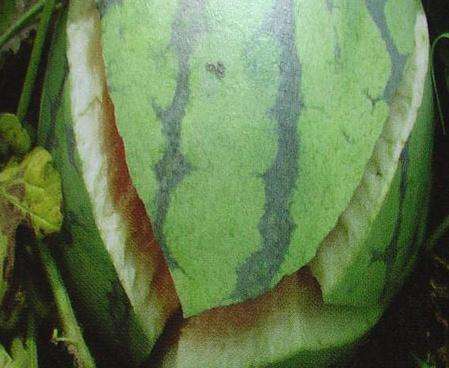
Watermelons are mainly cultivated in summer, and their fruit is composed mostly of water. Summers are rainy, and watermelons easily absorb large amounts of water, but after rain when the sky clears or during sudden drought, watermelons are extremely prone to cracking. Fruit cracking is the most common problem in watermelon growth regulation; once cracked, the fruit can only be removed, and if not removed it may trigger rot disease. The damage is even more serious, so in production we should do the following work well to avoid watermelon fruit cracking.
1. Water control
The planting field can be chosen on slightly higher sandy loam land, with drainage and irrigation facilities and ditches properly built in the field to facilitate drainage and aeration. After rain, prevent water accumulation in the field; the ditches can be deeper. Water according to the weather; if there is no rain in the coming week, you can water, and keeping the most suitable field moisture content is enough. On sunny days, watering in the evening is best. During the vegetative growth period, you can water more to promote leaf and vine growth. After fruiting, control moisture by watering less or not at all. During the fruit expansion period, sufficient water is needed, but it should not exceed what is required. After ripening and before harvest, do not water.
2. Fertilizer control
The nutrient most needed for watermelon fruit growth is potassium fertilizer; potassium fertilizer can increase the flexibility of the rind, so generally more potassium fertilizer should be applied. Watermelon leaves and vines have strong growth capacity; in order to balance the growth relationship between fruit and leaves and vines, less nitrogen fertilizer should be applied. Generally, the base fertilizer is decomposed compost or farmyard manure, and the topdressing is quick-acting compound chemical fertilizer.
3. Temperature regulation
Temperature control can mainly be adjusted only under protected cultivation conditions, mainly by ventilating when the temperature inside the shed is too high to prevent overly fast growth and fruit cracking. After a long period of overcast and rainy low temperatures, when the weather clears, do not rush to ventilate and raise the temperature; you should first shade, then gradually ventilate, raise the temperature, and expose to light.
4. Prevention
When cultivating in the open field, use plastic mulch, and use arched sheds for early growth so that the rainy season is missed and cracking can be avoided. In addition, you can harvest early during low-temperature weather to prevent it. When picking, handle gently during transport.
There are many causes of watermelon fruit cracking, including natural factors and human factors, but no matter what the cause, solving the problem and avoiding fruit cracking is the most important thing.