A detailed guide to peach fertilization techniques: master the scientific method of fertilizing
The peach originated in our country and is widely cultivated; its fruit is delicious and suits young and old alike. It is also rich in carotene, making it a good way to supplement nutrition for children. There are many kinds of peaches, and different variety series are available in each period, fully meeting the market's demand across all four seasons. Management and maintenance during peach tree cultivation are very important, and fertilization is the main focus. Today we will explain how fertilization should be done in each growth period and what techniques are involved.
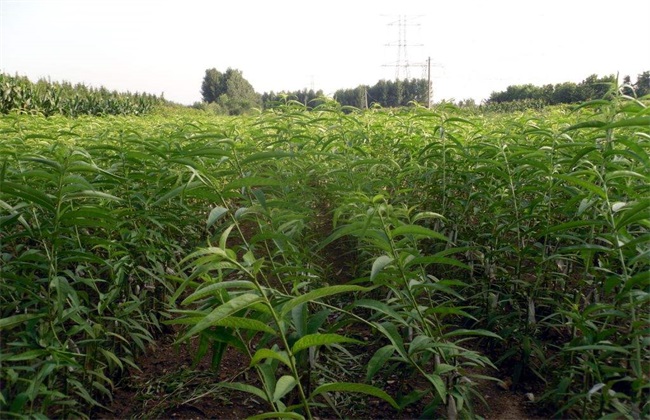
I. Fertilizer requirements
Peach trees can adapt and grow in ordinary soil, but slightly acidic soil is preferable; too low or too high a pH affects growth. Fertile sandy loam with good permeability is best; if the soil is heavy clay and overly fertile, fruiting is easily delayed.
The peach root system is mostly shallow, so to prevent roots from rising to the surface, fertilizer must be applied deeply. Peach trees store nutrients in the weeks before flower bud differentiation, so fertilization should be strengthened after fruit harvest.
Young trees grow relatively fast, but fertilization should focus on phosphorus and potassium fertilizers with little nitrogen fertilizer, because nitrogen easily delays flower bud differentiation and leads to later fruiting. In the full fruit-bearing period, a large amount of nitrogen fertilizer is needed to stabilize tree vigor and coordinate the nutritional needs of flowering and fruiting, so nitrogen and potassium fertilizers are the main types used.
II. Fertilization techniques
1. Base fertilizer
Apply it one month before the tree sheds its leaves, or after fruit harvest. It is generally based on organic fertilizer; nitrogen fertilizer can be applied according to tree size, accounting for about 50% of the annual fertilization amount, with the fertilization amount per mature peach tree equivalent to 0.3-0.6 kg of pure nitrogen. Potassium fertilizer is about 20%, with the application amount equivalent to 0.25-0.5 kg of pure potassium oxide. It must not be applied too close to the tree, as this easily burns the roots.
2. Flower-promoting fertilizer
Apply it before flowering in spring, mainly nitrogen fertilizer, accounting for about 10% of the annual fertilization amount, together with irrigation. The nitrogen fertilizer amount per mu, calculated as pure nitrogen, is about 5 kg, roughly equivalent to 5-10 kg of urea or 10-30 kg of ammonium bicarbonate. If the base fertilizer was applied in sufficient quantity, the flower-promoting fertilizer can be applied sparingly or not at all.
3. Fruit-setting fertilizer
Apply fruit-setting fertilizer after flowering and before the pit-hardening stage; it is mainly used to increase tree nutrition, protect flowers and fruits, and promote fruit set and rapid fruit growth. It is mainly nitrogen fertilizer, supplemented with a small amount of phosphorus and potassium fertilizer. The application accounts for about 10% of the annual amount, and the nitrogen fertilizer amount per mu is about 5 kg of pure nitrogen, which is roughly 3-9 kg of urea.
4. Fruit-swelling fertilizer
Apply it after the second rapid fruit growth period; fertilization during the fruit-swelling period is carried out together with fertilization during the flower bud differentiation period. Fruit-swelling fertilizer is mainly nitrogen and potassium fertilizer, and an appropriate amount of phosphorus fertilizer can be added. The fertilization amount accounts for about 20%-30% of the annual amount; the nitrogen fertilizer amount per mu, calculated as pure nitrogen, is 4-9 kg, roughly 8.6-20.8 kg of urea. For potassium fertilizer, 5-15 kg of potassium oxide per mu is roughly 12-30 kg of 50% potassium sulfate. 10-30 kg of superphosphate can also be added.
Peach fertilization is generally divided into applications at each period, so it is necessary to fertilize according to different conditions and needs in each period and according to the fertilizer requirements of peach trees; this ensures smooth growth and development at each stage, increases yield to a certain extent, and prevents the occurrence of alternate bearing.