Detailed Explanation of Key Points of High-Yield Blueberry Cultivation Techniques
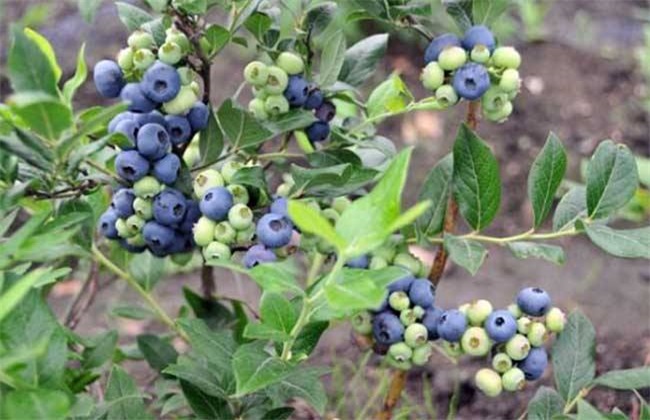
Blueberries are a fruit that has become well known in recent years, with excellent nutritional value and distinctive characteristics. Previously, blueberries were relatively expensive on the market, but through several years of cultivation development, blueberry prices have become more affordable. For blueberry sales, this can be considered a good thing, as it has expanded market demand. Increasing blueberry yield is a goal that everyone pursues in cultivation, so I have summarized high-yield cultivation methods based on the characteristics of blueberry growth and development.
I. Orchard Establishment and Variety Selection
First, it is best to establish a plantation in an area at an altitude of about 500 m, and it must be on land with convenient transportation and convenient drainage and irrigation. It is best to use greenhouse or plastic tunnel cultivation. Before planting, test the orchard soil; blueberries are suitable for growing in soil with a pH of 4 to 4.5. Therefore, the planting soil can be improved, and based on the test results, the amount of fertilizer and sulfur powder needed for improvement can be determined. Generally, 500 jin of fertilizer is applied per mu, and about 600 jin of sulfur powder can be added. When improving the soil, some fermented peanut shells, soybean cake, pine needles and other organic fertilizers can also be added. You can choose the northern highbush blueberry suitable for greenhouse planting, because it has strong adaptability, superior disease resistance, and strong, vigorous stems, making it a preferred variety.
II. Planting
Generally, two-year-old seedlings are selected for planting, mostly in autumn. The ridges and rows generally run north-south, the ridge width is generally about 30 to 40 cm, the ridge height is about 25 cm, and the width of the retained furrow is about 20 cm. Plant in rows, with a row spacing of about 1 m and a plant spacing of about half a meter. When planting, pay attention to pruning the roots, cutting off some diseased and damaged roots, and planting after soaking them in water mixed with rooting powder.
III. Post-Planting Management
Long-day conditions are beneficial to blueberry growth, so they can receive more than 12 hours of light per day. However, flower bud differentiation needs to occur under short-day conditions within 8 hours. You can open the shade net after 12 o'clock to receive intense light. In autumn, base fertilizer is generally applied using some crop straw compost. During the growing cycle, some grass species of the Poaceae family can be planted in the orchard and used as green manure during intertillage. Apply compound fertilizer once as a topdressing during the fruit growth period. The amount of water required for growth is relatively small; aside from one flood irrigation before winter, usual drip irrigation according to soil moisture is sufficient. Greenhouse cultivation generally has no diseases, but if they occur, it is only necessary to control humidity, promptly remove diseased branches and diseased fruits, and uniformly spray the corresponding pesticide once.
In blueberry planting, special attention should be paid to the planting method and later fertilizer and water control. If the above points are done well, I believe a certain yield can basically be maintained. On a stable basis, it can be improved.