What are the precautions for planting wild grapes?
There are many varieties of grapes, and they are now a major fruit sold fresh and also dried as a snack. Wild grapes are an important wild economic crop, and in recent years they have also attracted many people to invest in them or plant them on a large scale themselves. So what details should we pay special attention to during the wild grape planting process? Below I will list and explain them one by one.
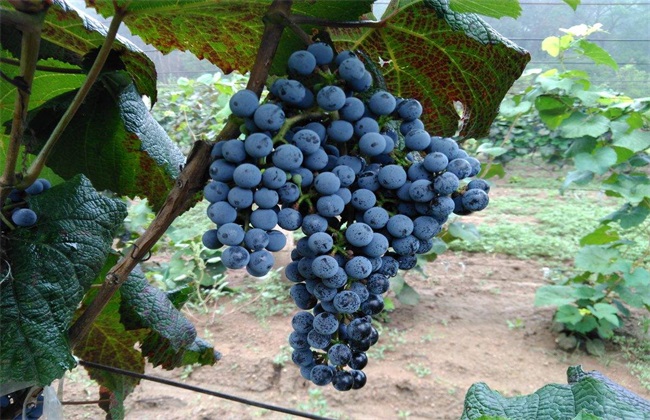
I. Establishing the orchard
Choose a sheltered, sunny plot with deep soil for planting. In autumn or early spring, dig the planting rows at a spacing of about 0.5 m and a width of about 1 m, leaving a ditch of about 15 cm for convenient drainage and irrigation. After digging, mix the excavated soil with fallen leaves and base fertilizer and add it to the row surface to use as nutrient soil for cultivation. Use the fan-shaped trellis method for planting, otherwise rainfall will lead to disease infection.
II. Planting out
Choose pure grafted seedlings with longer and more numerous roots for planting; it is best if the stem thickness is above 0.5 cm and the plant height is around 80 cm. The buds should be plump and the internodes short and thick. Planting must be done from April to May. Autumn planting must be done before frost. Before planting, the roots can be soaked in water mixed with rooting powder so that they take root quickly after planting and to help the roots recover. The planting hole is generally 1 m deep and 1 m wide. First fill back the subsoil mixed with fertilizer, then water once, fill in some topsoil and base fertilizer, place the seedling in, hold the seedling with one hand while backfilling soil with the other, then lightly tread the soil once, straighten the seedling and lift it slightly, water thoroughly, and then mound soil up to the root crown; the planting is then complete.
III. Management
1. Fertilizer and water
The base fertilizer is all farmyard organic fertilizer, generally applied before the autumn frost. Topdressing is done in stages: at the bud break stage, apply 15.0 kg urea + 7.5 kg superphosphate + 15 kg potassium sulfate per mu; one week before the flowering stage, apply 20 kg urea + 10 kg superphosphate + 20 kg potassium sulfate per mu; before the fruit begins to change color, a certain amount of phosphate fertilizer needs to be supplemented. If the stems appear unable to climb vigorously, some plant ash should be used to supplement potassium fertilizer and strengthen the stems. After the grapes are trained onto the trellis and before bud break, water once to promote bud break; before flowering, during the shoot growth stage, water once to promote growth; during the fruit coloring stage, water once; before winter cold protection, water once with freezing water, and after the water has seeped into the soil, mound soil. Generally, do not water during the flowering stage, as this is not conducive to flower retention.
2. Cold protection
Between October and November, carry out mounding with soil for cold protection. Take soil from a place slightly farther from the roots, break it up finely and disinfect it, add decomposed farmyard manure and mix evenly, then place it at the base of the plant, covering with soil up to about 20 cm of the stem, so that cold protection is effective. The covering soil is slowly dug away after the weather warms up the following spring.
The issues needing attention in wild grape planting are mainly the several major points above. Although various detailed problems will appear in actual production, I believe that generally following what is said above can avoid most problems.