Detailed Explanation of Yellow Peach Cultivation Techniques and Management Key Points
The yellow peach gets its name from its fruit color. Yellow peaches have effects such as improving immunity, and belong to health-care fruits. They are mainly grown in central and southwestern China, among which Hunan Yanling yellow peach and Guidong high-mountain yellow peach have the best quality. The unique taste of yellow peach gives it relatively strong competitiveness in the market. So how should yellow peaches be cultivated? Next, let us learn about it together.
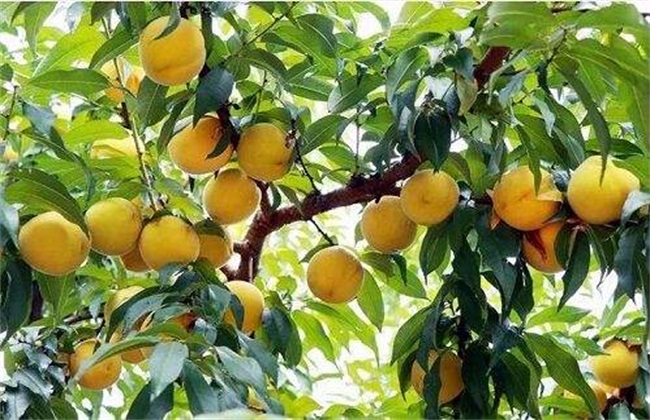
I. Orchard Establishment and Variety Selection
For orchard establishment, mountain basins are generally unsuitable; sites are usually chosen in mountainous areas with a moderate slope, sheltered from the wind and facing the sun. Yellow peaches adapt to acidic soil, but they can also grow in alkaline soil. Generally, land with moderate soil acidity and alkalinity and convenient drainage and irrigation is chosen as the planting orchard. The variety is determined according to the planting scale. For generally large-scale planting, seedling trees of varieties that are disease-resistant, dwarf and sturdy, cold-resistant, and drought-resistant should be selected. For example, domestic and foreign varieties such as Jinxiu yellow peach, Yellow Peach No. 1, and the Jintong series.
II. Seedling Planting
What is planted most today is grafted seedlings. Grafted seedlings generally need to be 80 cm tall, with a thickness of about 0.6 cm. Wild peach is often chosen as the rootstock to make use of the wild peach's superior resistance. Generally, the root system must not be damaged, and the leaves should grow healthily and well. Planting is generally done in early spring or autumn, and the planting density is about 3 m between rows and 2 m to 3 m between plants. The planting hole is generally 70 cm deep, and the length and width of the hole opening are both about 80 cm. The excavated topsoil and subsoil are piled separately. First mix the subsoil with base fertilizer evenly and backfill it, then plant, holding the seedling upright and placing it into the hole, then backfill the topsoil and mound soil up to the root crown. Water with settling water, thoroughly watering once.
III. Management
1. Determining Tree Shape
One year after planting, cultivate the tree shape. Cut back at 80 cm above the ground to determine the trunk, leaving 10 plump buds. After new shoots emerge, leave three to four robust branches as main branches. After the second year, remove all buds on the trunk, and on the main branches leave buds every 10 cm. Once side branches are cultivated, the tree shape can be considered set.
2. Controlling Water and Fertilizer
In the first two years, apply fertilizer in small amounts and many times. Before bud break, apply nitrogen fertilizer; when promoting shoots, one nitrogen fertilizer application per month is suitable. During the full fruit-bearing period, apply urea as a top dressing, about one jin per tree. After harvest, apply a large amount of decomposed farmyard manure as base fertilizer. In autumn, turn the soil 20 cm deep to make the soil loose and breathable and promote root growth. After the tree body sprouts, water continuously many times in small amounts, and when fertilizing, water more along with it. Before winter, after leaf fall, water thoroughly to avoid water shortage after freezing, which would make nutrient transport impossible.
The specific matters needing attention in yellow peach cultivation are the above content. However, to increase yield, it is still necessary to combine this with your own actual situation and solve specific problems specifically during cultivation. I hope the above content can be of some help to you.