Why Lychee Trees Flower but Bear No Fruit and How to Fix It
Lychee trees adapt to growing in tropical environments, and with timely care they generally grow well. However, under extensive management and neglect, they easily show the phenomenon of flowering without fruiting, and after long-term neglect they become merely ornamental. This causes certain losses to the economic benefits of cultivation. So to maximize profits, the measures described below are needed!
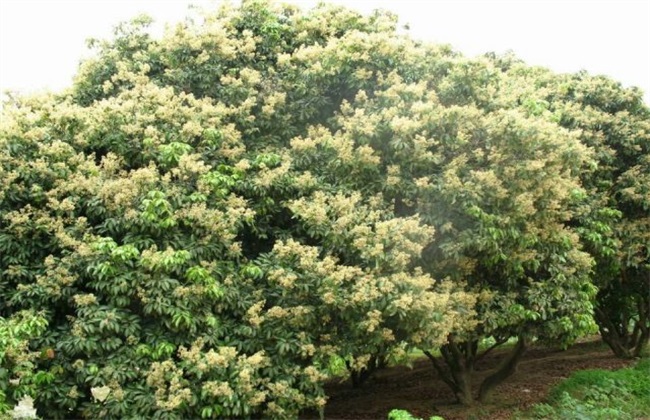
I. Causes
Continuous rainfall washes away pollen and affects pollination effectiveness, or consecutive days of strong wind scatter the pollen and cause poor fertilization. Hot weather keeps the pollen from opening, making fertilization impossible. Compacted soil that cannot breathe, being barren with no nutrients, and insufficient water all cause poor tree growth with not enough nutrients to support fruiting. Pests and diseases damage the tree, weakening its vigor and causing fruit drop.
II. Adjustment Methods
1. Control Water and Fertilizer
At every stage of growth and development, fertilizer should be applied in a timely manner based on the overall situation, observing the response of the leaves, fruit, and branches to supplement the trace element fertilizers the tree needs. After fruit harvest each year or during spring bud break and shoot growth, apply 70% of the total annual amount of decomposed fermented farmyard manure as a base fertilizer. At the same time, after the flower spikes emerge and before flowering, spray an organic liquid fertilizer on the leaves, such as the plant nutrient regulator Yuhualing No. 2, 2-3 times. But do not apply nitrogen fertilizer before flowering, to avoid excessive vegetative growth.
2. Shorten the Flower Spikes
When the main flower spike grows to about 10 cm, it needs to be shortened, leaving 4-5 vigorous side flower spikes to avoid nutrient consumption. Combined with spraying the plant nutrient regulator, this improves the leaves' photosynthetic capacity, producing more nutrients to meet the growth and development needs of the tree and fruit, keeping the tree in good vigor.
3. Remove Buds and Thin Branches
When the branches and shoots have grown enough to meet the growth and fruiting needs of the current year and the next year, promptly thin out crossing branches, overlapping branches, pest- and disease-damaged branches, weak branches, and withered branches to avoid nutrient consumption. Remove the vigorous shoots at the top to eliminate apical dominance, store nutrients, and balance tree vigor; this also allows the tree to get ventilation and light, preventing flower and fruit drop caused by a stuffy internal environment from low temperatures and overcast rain.
4. Thin Flowers and Preserve Fruit
Let about 50%-70% of the first batch of flowers drop, then cultivate the later flowers into female flowers to promote fruit set. If the fruit needs to be ripened early, after the first batch of female flowers completes pollination and fertilization, do not keep the later flowers.
5. Hand Pollination
When the anthers split open, use a wet brush to collect pollen and mix it with sucrose and 0.01% borax to make a pollen solution, then spray it on the open female flowers within half an hour of collection.
Lychee trees that only flower without fruiting have the above causes. I hope that after understanding them, you can address the problem of your own lychee trees not fruiting in a targeted way, and take corresponding measures to promote flowering and fruiting and achieve a good yield.