Detailed Explanation of Grape Cluster Elongation Technique: Master the Correct Elongation Method
After fruit-setting treatment, some grapes set a large amount of fruit, which often makes later thinning work difficult. The mutual squeezing of berries leads to fruit cracking and rotting, seriously affecting quality. Therefore, cluster elongation treatment should be carried out before flowering. So how should grape cluster elongation be done? Let's find out together.
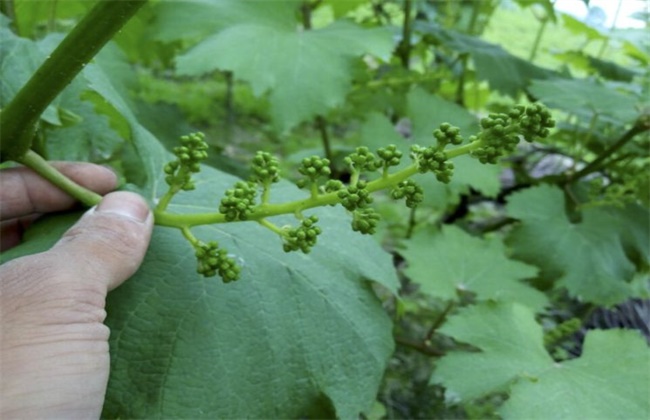
1. Effects of Cluster Elongation
Cluster elongation means stretching the cluster. It can reduce later flower and fruit thinning work, saving considerable labor costs. After elongation, the compactness of the cluster is reduced, which helps the berries enlarge, improves fruit quality, and avoids fruit cracking and rotting. It can also increase the effect of light intensity on the flowers and raise the fruit-setting rate. In addition, after elongation the gaps between the clusters are larger, which helps reduce pest and disease control efforts.
2. Timing of Cluster Elongation
The degree of cluster elongation is related to the timing of elongation. Too early will make the cluster too long, while too late will produce no obvious effect. Generally, it is best done at the 6-7 leaf stage of new shoots, when the cluster has grown to 7-10 cm, that is, 20-25 days after bud break, about 20 days before flowering. Although elongation has many benefits, it is not suitable for all grape varieties. Some varieties develop large and small berries and stiff fruit after elongation, which instead increases thinning work. Varieties generally suitable for elongation include Red Globe, Manicure Finger, Red Globe (Red Globe), and Summer Black, while the variety not suitable for elongation is Kyoho.
3. Methods of Cluster Elongation
At present, cluster elongation mainly includes two types: fertilizer and water management elongation and chemical elongation. Fertilizer and water management elongation is relatively safe, but it is slow, has no obvious effect, and is greatly affected by temperature. Generally, about 15 days before flowering, water-soluble fertilizers such as urea, humic acid, and amino acids are applied by drenching. This method requires a period of practical experience. Applying nitrogen fertilizer before flowering carries certain risks, and differences in the environment of each region also create variations. Using fertilizer and water management for elongation requires an average daily temperature of about 20-25°C. Chemical elongation acts quickly and is relatively safe. It can generally be carried out when the cluster emerges from the leaves and stopped 10 days before flowering. Commonly used chemicals include gibberellin, Bihu, and abscisic acid analogs, among which gibberellin is used more often.
4. Precautions
When using chemicals for elongation, attention should be paid to factors such as grape variety, tree vigor, tree age, and climate. At high temperatures the concentration should be lower, and at low temperatures the concentration should be higher. For strong tree vigor the concentration should be higher, and for weak tree vigor the concentration should be lower. After elongation, diseases should be prevented so as not to affect quality and sales. For certain varieties, fruit-setting work should also be done well.
The above is an introduction to grape cluster elongation technique. We hope it can help you. To learn more related knowledge, please follow us.