Detailed Explanation of the Key Points of Summer Black Grape Cultivation and Management Techniques
Summer Black grape is a variety of grape derived from Kyoho grape, but it matures earlier than Kyoho, tastes better, and has no seeds and a high sugar content, making it very popular. As market demand for it grows, many growers have seen its profitability, and there is currently a certain planted area in our country, so how should Summer Black grapes be cultivated? Let's take a look together.
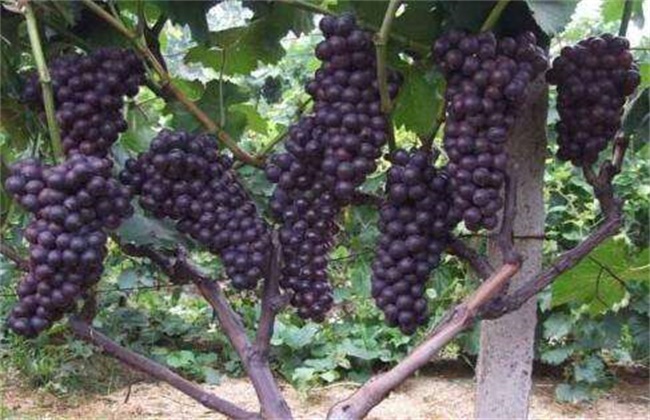
1. Orchard Establishment and Planting
The Summer Black grape orchard should be established on flat, open terrain, must ensure a good drainage system, and should choose soil rich in organic matter, fertile and loose, with good permeability. Before planting, the soil should be deeply ploughed, and planting pits should be dug at a row spacing of 3 m; decomposed farmyard manure should be applied in the trenches as base fertilizer, generally 4000 kg per mu, with an appropriate amount of chemical fertilizer added. After fertilizing, cover with soil and irrigate, allowing the soil to settle naturally, and after the water dries, fill the trenches level. Select high-quality seedlings for cultivation, and the planting depth should be the same as the depth of the seedlings in the nursery; too deep or too shallow is unfavorable for their growth.
2. Training and Pruning
After planting, trellises should be set up promptly to guide the vines, and summer pruning should be done well at the same time. Summer pruning includes bud removal, shoot thinning, pinching, tendril removal, and vine tying. Bud removal is generally carried out after inflorescences appear, generally leaving 2-3 buds per branch, removing deformed buds and weak buds, and selecting and keeping normal, strong buds; shoot thinning is carried out before flowering, leaving a moderately vigorous new shoot every 20 cm, and promptly removing thin, weak, overly dense, and improperly positioned new shoots; pinching is carried out before flowering, and attention should be paid to the position of pinching, generally choosing large leaves for pinching; timely removal of tendrils can save nutrients and benefit fruit growth, and when new shoots grow to 50 cm, tie the vines promptly to avoid breakage. In addition, winter pruning should also be carried out, generally half a month after leaf fall, mostly using short-spur pruning; fruiting canes are generally cut back leaving 2-3 buds, and all the rest are removed, while diseased and dead branches, weak branches, and overly dense branches should also be pruned.
3. Flower and Fruit Management
Summer Black grapes grow vigorously and have good flower bud differentiation; most new shoots have more than 2 inflorescences, but in order to save nutrients and improve fruit quality, flower thinning is needed, generally leaving only 1-2 inflorescences per new shoot, with the rest removed promptly, while also removing inflorescences that are too small, poorly developed, or damaged by pests and diseases. At the same time, to improve the fruit set rate, fruit-setting measures should be taken promptly; generally 4-10 days after flowering, gibberellin is sprayed, and after fruit set, thinning should be carried out promptly. When the size of the berries is clearly distinct, fruit thinning should be done promptly, removing too-small berries, too-large berries, deformed berries, densely clustered berries, pest- and disease-damaged berries, and poorly developed berries, to save nutrients and promote berry growth.
4. Fertilizer and Water Management
Summer Black grape is a variety with a relatively large fertilizer requirement. To ensure a high yield every year, attention should be paid to the use of organic fertilizer when fertilizing, as this can improve fruit quality and obtain higher economic returns. Annual fertilization consists of base fertilizer, bud-promoting fertilizer, pre-flowering fertilizer, fruit-swelling fertilizer, color-changing fertilizer, and post-harvest fertilizer. For Summer Black grapes, generally one heavy watering before budding and one after the soil freezes is enough for the entire growing period; at other times, attention should be paid to the amount of watering, especially during the flowering and fruiting period, where watering should be controlled to avoid reducing fruit quality.
The above is an introduction to Summer Black grape cultivation and management techniques. We hope it can help you. To learn more related knowledge, please stay tuned to us.