What causes figs to not bear fruit?
The fig tree has a relatively short stature, a rather attractive appearance, and is also an evergreen species that stays green all year round. Moreover, the fruit it produces tastes very good, and it can be grown at home, serving both as a bonsai and as a fruit tree. But if it fails to bear fruit during cultivation, then what is going on? Let's find out together.
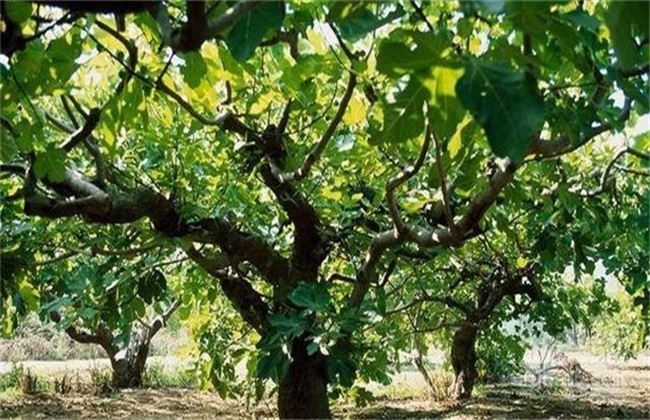
1. Insufficient light
The fig is a fruit tree variety that loves sunlight. If it is kept at home merely as a bonsai and placed in a shady environment, it will fail to bear fruit because of the lack of light. Therefore, when planting it, it must be grown in an environment with plenty of sunlight and good air permeability, and it should not be shaded from the sun. For potted figs at home, they should also be placed somewhere that gets sun, so that they can grow large and attractive fruit. In addition, light also affects the quality of fig fruit. If there is insufficient sunlight, the fruit produced will be astringent and small.
2. Improper pruning
Although the fig tree is not tall, it grows quickly. If it is not pruned in time, its branches will grow vigorously, consuming a large amount of the plant's nutrients, so that the nutrition needed for fruiting cannot be met, and thus it cannot bear fruit. Therefore, it should be pruned regularly to control the plant's excessive growth, and attention should be paid to the method when pruning. For branches that are relatively densely packed, thinning should be carried out to ensure good branch permeability, increase the light-receiving area, improve photosynthesis, and synthesize more nutrients. Bud removal, pinching, and other operations can also be carried out to inhibit the growth of new shoots, save nutrients, and promote fruiting.
3. Improper fertilizer and water
Figs like to grow in an environment with moist soil, and they also have certain requirements for fertilizer. Supplying sufficient fertilizer and water is the basic requirement for their normal growth and fruiting. If the fig lacks water and fertilizer, and nutrition cannot keep up with the needs of growth, not only will it fail to bear fruit, but its growth will also be inhibited, the tree will become weak, its resistance will be poor, its tolerance to the external environment will be low, and it will be highly susceptible to disease. In addition, during the new growth stage and the late fruiting stage, figs have an extremely high demand for fertilizer and water, accounting for more than half of the total fertilizer and water for the entire growth period, so the supply of fertilizer and water to figs must be sufficient. Generally, during the branch and leaf growth period, more quick-acting nitrogen fertilizer should be applied. When entering the fruiting period, nitrogen fertilizer application should be reduced or not applied, because too much nitrogen fertilizer will cause vigorous growth of branches and leaves and prevent normal fruiting. At this time, phosphorus and potassium fertilizers should be appropriately increased to promote fruit expansion. After harvesting the fruit, base fertilizer should be applied early, mainly with decomposed organic fertilizer or nitrogen and phosphorus fertilizer, to promote the fruit's recovery as soon as possible, accumulate nutrients, and lay a solid foundation for flower bud differentiation the following year.
The above is an introduction to what causes figs to not bear fruit. I hope it can help you. If you want to learn more related knowledge, please stay tuned to us.