Causes and Solutions for Uneven Berry Size in Kyoho Grapes
Many grape growers often encounter the phenomenon of uneven berry size during production, especially with Kyoho grapes, which seriously affects yield and quality and brings considerable economic losses to growers. So what causes uneven berry size in Kyoho grapes? How should it be solved? Let's take a look together.
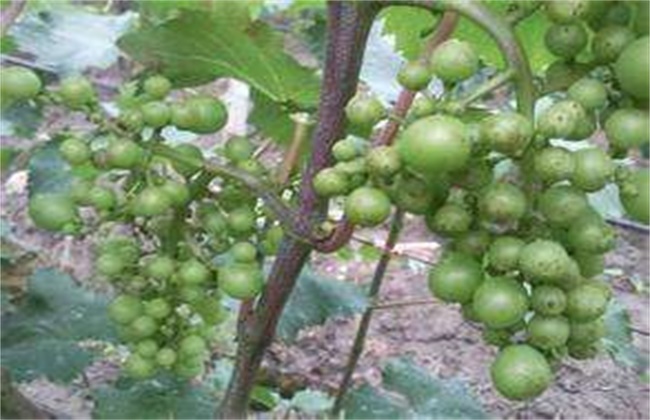
I. Causes of Uneven Berry Size
There are many reasons for uneven berry size in Kyoho grapes, but the root cause is poor pollination during the flowering period. The large berries are fertilized and contain seeds, while the small berries are unfertilized and contain no seeds. There are many reasons for poor fertilization: first, varietal reasons - some varieties are highly prone to uneven berry size, such as Kyoho and Jingya; second, excessively vigorous tree growth - if Kyoho grapes grow too vigorously, with new shoots that are too thick and too long, the phenomenon of uneven berry size will be more severe; third, climatic reasons - if the grape flowering period coincides with rainy weather, it will lead to poor fertilization, resulting in uneven berry size; fourth, improper human management - spraying pesticides during the grape flowering period can also cause poor fertilization and form uneven berry size; fifth, weak tree vigor - insufficient nutrition during the young fruit swelling stage prevents the fruit from swelling in time, forming uneven berry size.
II. Solutions
1. Control Tree Vigor
When new shoots grow too vigorously, fertilizer and water should be controlled, with particular attention to the application rate of nitrogen fertilizer. For excessively vigorous new shoots, pinching can be carried out to cultivate secondary shoots into fruiting branch groups. If the tree vigor is weak, fertilizer and water management should be strengthened to promote strong tree vigor, while measures such as pinching and cluster thinning should be taken to control the number of fruits and reduce the nutritional burden on the plant.
2. Rational Pesticide Spraying
Spraying pesticides is strictly prohibited during the grape flowering period. The spraying time can be changed to before or after flowering, when spraying will not affect grape pollination. Fertilizer can also be applied or boron fertilizer sprayed during the flowering period, which can significantly improve the fertilization rate and fruit-setting rate, with good results. Spraying zinc sulfate solution can also prevent the phenomenon of uneven berry size.
3. Rational Fertilization
When fertilizing, the balance of nitrogen, phosphorus and potassium fertilizers should be controlled, and it is not advisable to apply any single one excessively. Generally, a base fertilizer is applied once before spring bud break, mainly organic fertilizer, reasonably combined with diammonium phosphate and potassium sulfate. During the young fruit stage, the ratio of nitrogen, phosphorus and potassium should be controlled at 2:1:1, and during the color-turning stage, the ratio of nitrogen, phosphorus and potassium should be controlled at 1:2:2.
4. Use of Growth Regulators
Half a month after petal fall, when young fruits have grown to the size of beans, 20mg/kg forchlorfenuron can be sprayed to dip or spray the clusters, which has an obvious effect on eliminating uneven berry size in grapes. Gibberellin can also be used to treat fruit clusters during the flowering period or after flowering, which can also achieve the effect of eliminating uneven berry size.
The above is an introduction to the causes and solutions for uneven berry size in Kyoho grapes. We hope it can help you. For more related knowledge, please stay tuned to us.