What are the control measures for the alternate bearing phenomenon in fruit trees?
When it comes to alternate bearing in fruit trees, many fruit growers are familiar with it. It occurs in many orchards, especially in orchards at full bearing age. After alternate bearing occurs, one year the trees bloom and bear much fruit, and the next year they bloom and bear little, bringing huge economic losses to farmers. So how can alternate bearing in fruit trees be prevented? Let us take a look.
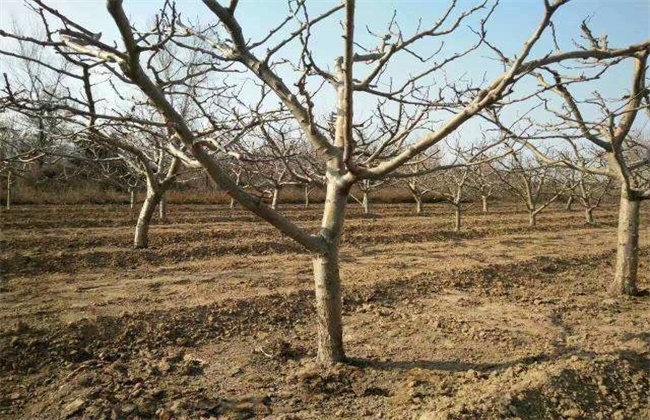
1. Strengthen orchard management
The main cause of alternate bearing in fruit trees is an imbalance between nutrient accumulation and consumption, so fertilization must be scientific, providing sufficient aeration for the growth and development of the fruit trees, keeping their nutrient accumulation and consumption in balance, and reducing alternate bearing. Fertilization should focus on applying base fertilizer in autumn and foliar spraying. Before leaf fall in autumn, dig trenches on one side of the plant and apply organic fertilizer to improve soil structure, increase permeability, and prompt the plant to recover its tree vigor as quickly as possible. When root absorption cannot meet the needs of growth, foliar spraying can be adopted to ensure the nutrient requirements of the plant. This situation generally occurs during the flowering and fruiting period, when the plant consumes relatively large amounts of nutrients and the roots cannot fully meet the demand.
2. Scientific pruning
Pruning can be improved to coordinate the relationship between vegetative branches and fruiting branches, promote flower bud differentiation in the plant, increase the fruit-setting rate, and significantly increase branches and leaves for yield. However, when pruning, attention should be paid to the renewal of branches and the cultivation of branch groups, and the proportion of vegetative branches, fruiting branches, and reserve fruiting branches should be arranged reasonably. The yield of some old fruiting branches will keep declining, so at this time they can be cut back to avoid nutrient consumption, and other new branches can be cultivated as fruiting branches. Repeating this cycle can prevent and reduce the alternate bearing phenomenon.
3. Fruit thinning and fruit retention
In production, in order to prevent and control alternate bearing, measures are often used such as thinning flowers and fruits in on-years and protecting flowers and fruits in off-years. Flower thinning is generally done at the initial flowering stage, and fruit thinning is generally done one month after the flowers fade. The timing of fruit thinning must be well controlled, because thinning too early or too late will affect the plant's measures. For protecting flowers and fruits in off-years, every possible method should be used to increase the nutrients in the plant, so as to ensure a large number of flower buds differentiate. During production, attention should be paid to flower and fruit drop.
4. Strengthen tree protection
Observe the weather forecast in a timely manner, pay attention to severe weather such as frost, hail, and late spring cold, and take preventive measures in time; in winter, do a comprehensive orchard cleaning, burn or deeply bury diseased branches, diseased fruits, diseased leaves, and ground weeds in time to reduce pathogens, and through measures such as spraying chemicals and whitewashing tree trunks, make preparations against freezing so the trees can overwinter safely. For pests and diseases, prevent and control them through measures such as chemical spraying and root irrigation to reduce the incidence rate in the coming year.
The above is an introduction to the control measures for the alternate bearing phenomenon in fruit trees. We hope it can not find you. To learn more related knowledge, please stay tuned to us.