What causes a pear tree to bloom but not bear fruit?
The pear is a major economic fruit tree in China, and China is rich in pear resources with many varieties. During pear cultivation, many fruit growers report that their pear trees bloom but do not bear fruit, which seriously affects the yield and quality of the pear trees and causes certain economic losses. So what is going on with pear trees that bloom but do not bear fruit? How should it be prevented? Let's find out together.
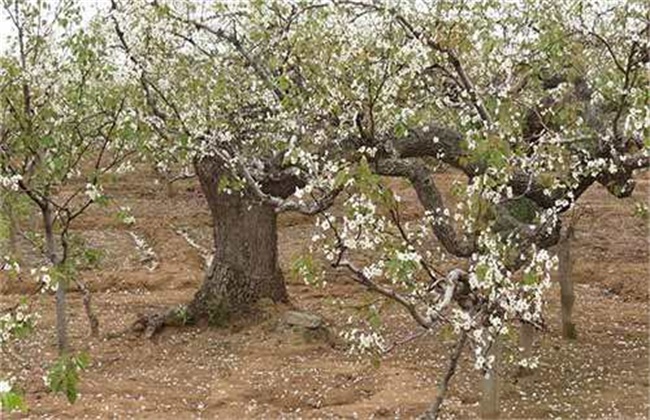
I. Causes of blooming without fruiting
1. Excessive nitrogen fertilizer
Some fruit growers apply excessive nitrogen fertilizer during cultivation to promote growth, which causes excessive vegetative vigor, resulting in trees that only grow branches without bearing fruit, or produce few flower clusters, or suffer severe flower and fruit drop with a low fruit-setting rate.
2. Abnormal climate
In spring, temperatures fluctuate greatly. If severe weather such as a late spring cold snap occurs during the pear tree's flowering period, it will cause severe flower drop and result in few fruits.
3. Poor drainage
During the pear tree's growth, in years with heavy rain, orchards with poor drainage will suffer waterlogging, which hinders tree growth and reduces fruit set; in severe cases, the roots rot and the tree dies.
4. Poor pollination
The flowering and pollination period of pear trees is extremely critical, especially since pear trees are cross-pollinated fruit trees, and self-pollination yields a low fruit-setting rate.
II. Preventive measures
1. Rational fertilization
Nitrogen fertilizer should be applied rationally: apply less nitrogen fertilizer and more phosphorus and potassium fertilizer to improve the flowering and fruit-setting rate of pear trees, which helps improve yield and quality later on.
2. Timely drainage
If there is excessive rain during the pear tree's flowering period, too much standing water will affect plant growth and reduce the fruit-setting rate, so drainage and waterlogging prevention measures should be well implemented, so that water can be reduced during drought and no water accumulates during the rainy season.
3. Pruning and branch tying
If the pear tree grows too vigorously, other main branches and some scaffold branches can be cut off, and overly dense branches can be pulled with ropes toward the edge of the canopy. This can both control excessive vegetative growth and increase the light-exposed area, helping to raise the fruiting rate.
4. Planting more pollinizer varieties
Pear trees are cross-pollinated fruit trees; pollination within the same variety has an extremely low fruit-setting rate and may even produce no fruit. Therefore, when planting, pollinizer varieties should be reasonably added to improve pollination quality and raise the fruiting rate. Generally, the ratio of the main variety to the pollinizer variety should be 3:1.
5. Artificial supplementary pollination
Artificial supplementary pollination can also be chosen. Select varieties with abundant pollen and strong compatibility as pollinizer varieties, collect mature anthers, and dry them under diffused light so the anthers crack open; then collect the pollen and carry out artificial pollination. Artificial pollination can be divided into point pollination and liquid pollination. For point pollination, dip a brush in pollen and lightly touch it onto the stigma of the female flower. Liquid pollination means mixing pollen with water, boron fertilizer, and granulated sugar in a certain proportion to make a liquid, then spraying it onto the flowers with a sprayer to complete pollination.
The above is an introduction to what causes pear trees to bloom but not bear fruit. We hope it helps you. To learn more related knowledge, please stay tuned to us.