What precautions should be taken when girdling fruit trees?
Girdling a fruit tree cuts off its nutrient transport pathway, regulates the tree's nutritional balance, and inhibits branch growth. It is extremely effective at promoting flower bud formation, reducing flower and fruit drop, and increasing fruit set. However, improper girdling not only weakens tree vigor and reduces resistance to environmental stress, but can also cause the tree to die. So what should be noted when girdling fruit trees? Let's take a look.
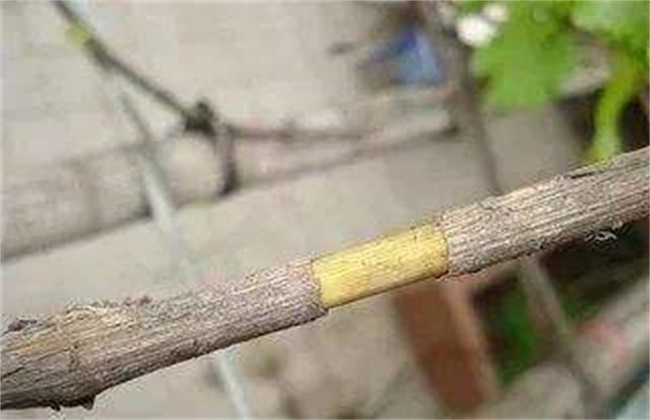
1. Pay attention to the type of girdling
When girdling fruit trees, you also need to consider the variety. Fruit trees such as apple, pear, jujube, and citrus can be girdled, but care must be taken when girdling peach, apricot, plum, cherry, and similar trees, because these stone fruit trees exude gum from the wound after girdling, and the hardened mass that forms affects wound healing, which is harmful to the tree's growth and development. In addition, when girdling, also check whether the tree vigor is strong; trees with good healing ability and strong vigor are suitable for girdling, while trees with weaker vigor are not.
2. Pay attention to the timing of girdling
Girdling is generally carried out in the early stage of flower bud differentiation, usually around June to July. If done too early or too vigorously, it will affect the tree's normal growth and development and flower bud differentiation. Weather should also be considered when girdling; choose a sunny morning if possible, and avoid rainy days, so that rainwater does not wet the wound and cause the plant to become infected with disease.
3. Girdling location
Girdling is generally performed on the scaffold branches, perennial lateral branches, and upright branches of the fruit tree. It is usually done on branches with a thickness of 5-10 cm or more, and the girdling site should be chosen on the smooth middle part of the branch if possible. The main trunk and relatively thin, weak branches of the fruit tree are not suitable for girdling; all of these points need attention.
4. Girdling depth and width
The width and depth of the girdle also need attention. Deeper or wider is not better; it should be determined according to the fruit tree variety, characteristics, tree vigor, and branch vigor. Generally, the depth should be controlled so that it cuts through the phloem of the branch and reaches the xylem without damaging the xylem. The width is generally one tenth of the diameter of the girdled branch; upright branches can be girdled somewhat wider, generally controlled at 0.3-1 cm, and it is best if the girdling wound heals within one month.
The above is an introduction to the precautions for girdling fruit trees. We hope it helps you. To learn more related knowledge, please follow us.