What are the cultivation techniques and management methods for the jabuticaba tree?
The jabuticaba tree is a fruit that combines beauty, health benefits, and medicinal value. It has extremely high value in food, medicine, and landscaping. Its fruit commands a relatively high price and offers excellent economic returns. Our country has a long history of cultivating the jabuticaba tree, and after many years of cultivation and grafting, there are now several dozen varieties of jabuticaba. Let's take a look at jabuticaba cultivation and management together with the editor below.
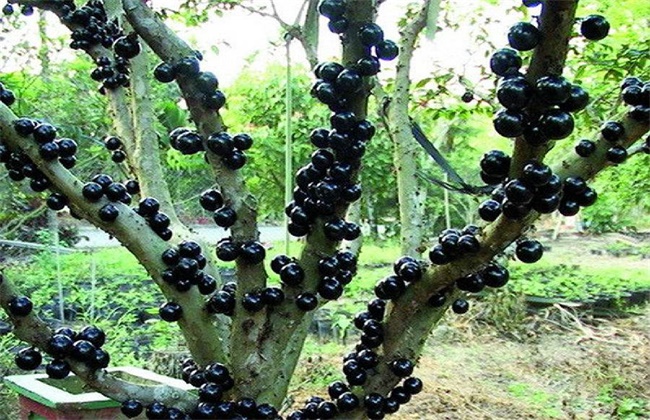
1. Planting Time
The jabuticaba tree is suited to tropical areas with abundant rainfall and relatively warm conditions, and it can tolerate a minimum low temperature of minus 3 degrees. In addition, it is a sun-loving plant that even requires good light. For planting, spring and autumn are generally better. In some areas where summer temperatures are not high, planting is also suitable, such as in Yunnan and Hainan in our country, but in other areas it is still better to plant in spring and autumn. This is because the temperature at these times is neither too high nor too low, less water evaporates after planting, watering and disease development are easier to manage, and the survival rate of planted trees is relatively high.
2. Propagation Methods
There are many propagation methods for the jabuticaba tree. The common ones are seed, grafting, and cuttings. Each method produces different results and is used in different situations. Seeds are the most widely used method because they germinate in greater numbers. After harvesting the fruit, place it in a refrigerated environment, and take it out when needed for use. However, the refrigeration time should be within 1-2 months and should not be too long. Generally, germination occurs 20-40 days after planting, and this is related to the temperature of the planting environment. Grafting is also one of the commonly used methods in some places. Jabuticaba trees propagated from seed need 6-10 years to bear fruit, while using the grafting method can make them bear fruit earlier, shortening the time by 2-3 years. However, this method is suitable for autumn and winter, when the survival rate is high, and should not be used in other seasons.
3. Fertilizer and Water Management
For jabuticaba trees, attention should be paid to the use of organic fertilizer, and reasonable large amounts of organic fertilizer, microbial fertilizer, and chemical fertilizer should be used rationally. The general ratio of nitrogen, phosphorus, and potassium is 1:2:1. Fertilization can be done by hole application or trench application. Organic fertilizer, microbial fertilizer, and chemical fertilizer should be applied in small amounts multiple times. Generally, this should be done according to its growth stages, such as flower fertilizer, fruit fertilizer, coloring fertilizer, and harvest fertilizer, applying fertilizer reasonably in stages to ensure balanced nutrition, promote rapid growth, improve yield and quality, and increase returns.
4. Pruning and Training
After the jabuticaba tree buds, bud thinning and shoot positioning should be carried out, removing double buds, multiple-head buds, and overly weak buds. After new shoots form, they should be tied and guided to both sides with wire to increase the crown area, increase the light-receiving area of the leaves, and synthesize more nutrients. In addition, it can also control excessive growth of new shoots, encourage more branching, and promote flower bud differentiation. The jabuticaba tree grows slowly and generally does not need pruning at ordinary times, but in order to shape a good tree form, timely pruning should be done on the vigorously growing top branches. In autumn, dense branches and leggy branches can also be pruned.
The above is an introduction to jabuticaba tree cultivation techniques and management. We hope it can help you. If you want to learn more related knowledge, please stay tuned to us.