Detailed Explanation of the Causes of Fruit Cracking and the Solutions
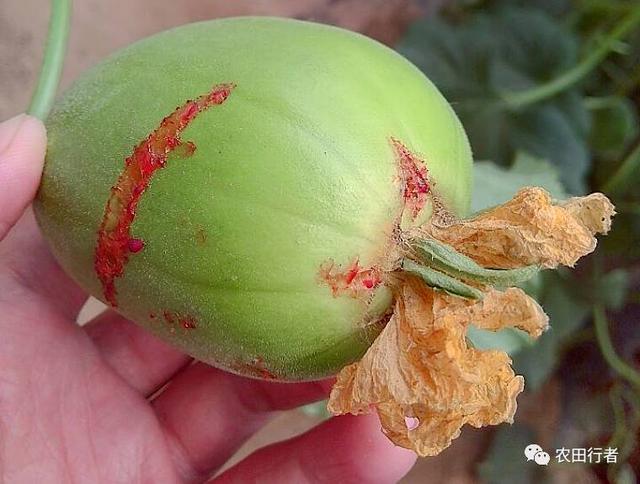
The Direct Cause of Fruit Cracking
The direct cause of fruit cracking is that the growth rate of the rind tissue near the fruit surface is inconsistent and uncoordinated with the growth rate of the inner flesh and pulp. In other words, the inner parts of the fruit (flesh, pulp) grow faster than the rind tissue, and excessive internal turgor pressure leads to cracked melons and fruits. Sometimes improper use of pesticides or fertilizers, or poor management, causes the rind to harden prematurely, also resulting in fruit cracking.
Cracked melons and fruits occur during the young fruit expansion stage under prolonged low temperatures, or in the later stage of fruit growth after the fruit surface has hardened while the interior of the fruit is developing vigorously. Its occurrence is affected by the degree of rind hardening and water content. When the weather is clear and sunlight is strong, the fruit epidermis hardens; on cloudy and rainy days, it hardens more slowly. If too much water is applied at this time, the plant absorbs water and fruit cracking is triggered.
The rind hardens as the fruit expands and matures, until it reaches harvest standard. In the late stage of fruit expansion or near maturity, the rind has already hardened and has little room to stretch. If soil moisture increases at this time due to watering or rain, the interior of the fruit will grow rapidly from absorbing water, causing severe fruit cracking. If the soil is dry during the fruit expansion stage and then soil and indoor air humidity rise again in the later stage, fruit cracking is likely to occur. In addition, if environmental conditions are somewhat dry from the early fruit expansion stage, causing the rind to harden prematurely, fruit cracking is even more likely.
Specific Causes
1. Variety-related causes:
Varieties with very thin or brittle rinds, and small-fruited varieties, are prone to cracking. Round watermelons crack more easily than oval watermelons, and oval watermelons crack more easily than long oval watermelons. Within the same variety, those with thick and short fruit stems crack more easily than those with thin and long fruit stems.
2. Improper use of hormones:
In protected facility cultivation of watermelons and melons, during the early fruit-setting stage, because the environmental conditions inside the greenhouse are difficult to make meet the requirements for the flowering and fruiting stage of watermelons and melons, the fruit-setting rate is low. Therefore, melon growers often use hormone treatment on the fruit buds to increase the fruit-setting rate. However, during the treatment process, improper hormone use often occurs for various reasons, such as excessive hormone concentration, repeated treatment, or treatment during high temperatures, all of which may cause fruit cracking.
3. Soil-related causes:
Melon field soil that is too sandy or too heavy in clay is unfavorable for improving the soil's buffering capacity. Sandy soil leaks fertilizer and water; excessively heavy clay leads to compaction, root rot and wilt, too little organic matter and microorganisms, and low fertilizer use efficiency...... Once the soil's buffering capacity declines, it directly affects the melon plants.
4. Fertilization-related causes:
Emphasizing topdressing over base fertilizer, emphasizing nitrogen fertilizer over phosphorus and potassium fertilizer, emphasizing macroelement fertilizer over medium and trace element fertilizer, emphasizing root fertilization over foliar fertilization, and emphasizing chemical elemental fertilizer over organic fertilizer, biological fertilizer and farmyard manure, etc., will all cause nutrient imbalance in the melon field soil. The lack of medium and trace elements and organic matter in the soil also easily leads to fruit cracking.
5. Watering-related causes:
Abrupt changes in water supply to the fruit during the fruit-setting period, such as prolonged drought followed by rain or a sudden heavy watering after prolonged drought, cause the watermelon to absorb water and the pulp to increase in volume too quickly. The rind's growth rate cannot keep up with the pulp's growth, so it splits. Plots deficient in calcium and magnesium are also prone to fruit cracking.
6. Temperature-related causes:
When long cloudy weather suddenly turns clear, fruit cracking can also be caused because the temperature rises too quickly and too high. In greenhouse cultivation, when the nighttime temperature is low or cold wind enters during daytime ventilation, the rind hardens, and watering at this time easily causes fruit cracking. For melons in the late fruit-setting stage, when the greenhouse temperature is below 15°C, when ventilation is opened too wide and too suddenly all at once, or when natural disasters such as cold waves cause excessively large day-night temperature differences, all these conditions expose the surface of watermelons and melons to cold wind stimulation, making it easy for them to harden and causing fruit cracking.
7. Physical factors:
When fruits are subjected to collisions, squeezing, insect damage, weed damage and other injuries during growth, fruit cracking is also likely to occur.
8. Direct sunlight:
After the surface of watermelons and melons is exposed to sunlight, not only is sunscald likely to occur, but the rind also ages, hardens and shrinks. After the rind shrinks, concentric circular cracking lines form on the melon surface.
9. Harvesting too late:
When watermelons and melons approach maturity, the rind begins to harden and stop growing. If they are not harvested in time at this point, because the root system is still continuously absorbing nutrients and water and the pulp continues to grow and expand, excessive turgor pressure will cause fruit cracking.
10. Water accumulation in the field:
Due to relatively heavy soil clay or low-lying terrain, water accumulation occurs after watering or rainfall. If the soil's water-holding capacity is too large, the root system absorbs and transports water and nutrients too quickly, causing the flesh to grow faster than the epidermal tissue and resulting in fruit cracking.
Ten Countermeasures
1. Select good varieties. 2. Use hormones appropriately.
3. Improve soil quality. 4. Fertilize scientifically.
5. Water reasonably. 6. Control temperature scientifically.
7. Strengthen protective measures. 8. Avoid strong direct sunlight.
9. Pay attention to drainage and rain shelter. 10. Harvest in time
Specific Causes
1. Select good varieties:
Choose watermelon varieties with strong rind toughness that are not prone to cracking. For summer cultivation of small-fruited watermelons, Black Beauty and similar varieties can be selected.
2、Use hormones appropriately:
In the early growth stage of watermelon, use 2000-4000 mg/L daminozide or 200-500 mg/L auxin for spray treatment on the fruit surface; or use 15 mg/L indoleacetic acid, 15 mg/L gibberellin, 30 mg/L naphthaleneacetic acid, or 8 mg/L cytokinin, as well as their mixed solutions, and spray the melon surface once every 7 days after flowering. This can prevent fruit cracking. Regardless of which hormone or method is used to treat the fruit buds, the solution concentration must be prepared according to the product instructions based on the agent's properties and the greenhouse temperature indicators. When treating fruit buds with hormones, avoid treating them during high-temperature and low-temperature periods as much as possible, to prevent solution water evaporation from causing excessive concentration and fruit cracking. After dipping the flowers, if too much solution remains attached to the fruit bud, tap the melon vine with your hand to remove excess solution and reduce the chance of fruit cracking. In addition, treated melon plants should be marked with a marker pen to prevent repeated treatment of fruit buds and resulting fruit cracking.
3. Improve soil quality:
Apply heavy amounts of organic fertilizer and biological fertilizer to increase the organic matter and microorganism content in the melon field. Also use plastic film mulching or heating wires to raise soil temperature and promote root development and absorption of water and nutrients from the plow layer. For soil with relatively heavy clay, sand and gravel can be mixed in to improve soil permeability.
4. Fertilize scientifically:
According to the fertilizer and water requirements of melons during the growth period, supply fertilizer and water in a balanced manner, and do not irrigate and fertilize blindly. When fertilizing, not only should sufficient base fertilizer be applied to meet the needs of early melon growth, but also timely topdressing should be carried out in the later growth stage to meet the fertilizer requirements of late melon growth. Spray calcium fertilizer on the leaves and apply additional potassium fertilizer and fulvic acid fertilizers to improve rind toughness.
Spray trace elements: Supplement organic nutrients and calcium through the leaves to enhance leaf photosynthesis, promote the formation and accumulation of sugars, and strengthen the toughness of the melon rind. This can effectively prevent fruit cracking, increase sweetness, significantly increase yield and improve quality.
In the early stage of watermelon development, when fertilizer and water are insufficient, supplement gradually. When topdressing, first spray on the leaves, then apply root topdressing and watering. Applying additional phosphorus and potassium fertilizer helps strengthen rind toughness and reduce fruit cracking.
5. Water reasonably:
After planting, control watering and appropriately harden seedlings at lower temperatures to promote roots growing deeper into the soil, prevent excessive vine growth, and favor the differentiation of robust female flowers. When young fruits have all set and grown to the size of eggs, irrigate promptly with a small amount of water to prevent excessive vine growth and promote normal development of young fruits. After that, irrigate thoroughly once every 5-7 days until stopping one week before harvest.
On the basis of sufficient base fertilizer and base water, fertilize as little as possible and water as little as possible. When watering is needed, water lightly; do not flood irrigate, and strictly avoid the soil alternating between dry and wet, so as to prevent excessive differences in soil water content before and after watering. Do not water 5-7 days before harvest. During high-temperature periods, water in the early morning or evening when soil temperature is low; do not water at noon when the temperature is relatively high, to avoid the root system absorbing a large amount of water after watering and supplying water too quickly and too much, which causes fruit cracking. After rain, drain water promptly. Spray boron and calcium fertilizer on the leaves to improve the toughness of the melon and fruit epidermis.
"Stick needles to cut off flow." That is, before furrow irrigation or heavy rain, use bamboo strips to whittle two bamboo needles with a diameter equal to 1/3 of the melon vine diameter, and insert them perpendicular to each other into the melon "stem" to control excessive nutrients flowing into the fruit and prevent fruit cracking caused by excess nutrients.
6. Control temperature scientifically:
In greenhouse production, take insulation measures to keep the average daily greenhouse temperature above 15°C; when ventilating, first open a relatively small vent, then gradually open it wider as the temperature rises; when a cold wave suddenly occurs, promptly add straw mats and other insulation materials to prevent a sudden temperature drop.
7. Strengthen protective measures to ensure reduced fruit cracking:
During field cultivation operations, try not to touch, or touch as little as possible, the young melons, and avoid human and mechanical damage. Timely control various diseases, insects and weeds to reduce the probability of fruit cracking.
8. Take measures to avoid strong direct sunlight:
Protect leaves and fruits: Take care to protect the leaves near the fruit and use them to shade melon fruits from sunlight, avoiding fruit cracking caused by sunlight-induced rind aging; when fruits are exposed to the sun, newspaper bags can be used to shade them and prevent direct sunlight. Shading can also prevent green spots from appearing on the fruit surface and keep the fruit attractive, which is especially important during summer cultivation.
9. Pay attention to drainage and rain shelter:
Summer has a lot of rain. To prevent rainwater from entering melon fields or heavy rain from striking open-field melons and fruits and causing fruit cracking, it is best to implement full-period rain-shelter cultivation. Greenhouses can be used for planting, and for open-field watermelons, insect-proof nets can be added over arched sheds to buffer heavy rain erosion. Use plastic film mulching and straw mulching cultivation to prevent drastic changes in soil moisture.
10. Harvest in time:
Harvest melons at noon or in the afternoon on clear days when the melon water content is relatively low. When harvesting in the morning or evening, because the melons contain more water, fruit cracking is more likely to occur during harvesting and transport.