What is compost? How to make compost from weeds and other waste
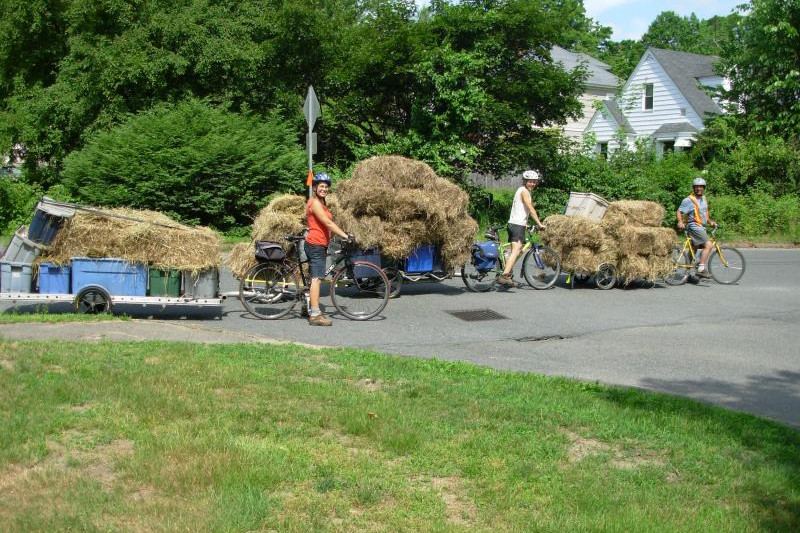
Loaded with dry grass for composting
(1) Composting site : Choose a place with higher terrain, sheltered from the wind and facing the sun, relatively close to a water source, and convenient for transport and application as the composting site. For convenience of transport and application, the piling sites may be appropriately dispersed. After the composting site is selected, level its ground.
(2) Setting up ventilation channels : On the leveled and tamped ground, dig cross-shaped or well-shaped trenches, about 15-20 cm deep and wide, and lay hard crop straw lengthwise and crosswise over the trenches as the ventilation trenches at the bottom of the compost, and at the intersection of two small trenches, place wooden sticks or bundles of long, thick, hard straw vertically to the ground as the upper and lower ventilation channels of the compost.
(3) Formula ratio of composting materials: The general mixing ratio of piling materials is: about 1000 jin of various crop straws, weeds, fallen leaves, etc., add 200-300 jin of manure and urine, and 100-200 jin of water (the amount of water added depends on whether the raw materials are dry or wet); each layer may be appropriately covered with a thin layer of soil, mainly to play the role of limestone, peat, etc.
(4) Piling
a. On the ventilation trenches of the piling site, spread a layer of sludge, fine soil or turf soil about 20 cm thick as the bottom cushion to absorb the nutrients that seep downward.
b. Then pile the already treated materials layer by layer and tamp them down (about 25 cm per layer). And after sprinkling manure and urine fertilizer and water on each layer, evenly sprinkle a small amount of thin soil or lime.
c The straw must be soaked through with water; adding enough water is the key to composting.
(5) Management after piling
a During the composting period, frequently check the changes in moisture and temperature in the upper, middle and lower parts of the pile. For the checking method, a compost thermometer can be used for testing. If there is no compost thermometer, insert a long iron rod into the pile, leave it for 5 minutes, then pull it out and test it with your hand. If the hand feels warm, it is about 30°C; if it feels hot, it is about 40-50°C; if it feels scalding, it is above about 60°C. To check moisture, observe the dry and wet condition of the surface of the part where the iron rod was inserted. If it is in a moist state, it indicates the moisture is appropriate; if it is in a dry state, it indicates the moisture is appropriate; if it is in a dry state, it indicates the moisture is too little, and holes can be made at the top of the pile to add water.