How to grow Black Globe grapes for high yield? Key cultivation techniques
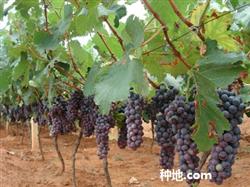
How should Black Globe grapes be grown to achieve high yields? American Black Globe grapes (two cultivars: Black Dali and Ribier), cluster weight 500-700 grams, conical shape, berry weight 10-12 grams, thick skin, black, fairly tough, flesh firm and crisp, juice purple-red, containing 18% soluble solids, extremely sweet, excellent quality. From bud break to fruit...
How should Black Globe grapes be grown to achieve high yields?
American Black Globe grapes (two cultivars: Black Dali and Ribier), cluster weight 500-700 grams, conical shape, berry weight 10-12 grams, thick skin, black, fairly tough, flesh firm and crisp, juice purple-red, containing 18% soluble solids, extremely sweet, excellent quality. The growing period from bud break to fruit maturity is about 160 days, and the fruit ripening period is mid to late September. Because the berries are firmly attached, hard, and do not drop, they are extremely tolerant of storage and transport, making this one of the excellent late-maturing cultivars, welcomed by producers. However, in production Black Globe grapes show extremely low disease resistance and are susceptible to black pox, downy mildew and other diseases. Poorly managed orchards often suffer severe disease, poor economic returns, and even vineyard destruction. The following is a brief introduction to quality and high-yield cultivation measures for Black Globe grapes.
I. Orchard establishment
Choose loose soil with deep soil layers, a water table below 1 m, and good drainage, with neutral or slightly alkaline soil (pH 6.0-7.5) to establish the orchard. Use trellis cultivation, with a spacing of 1 m x 2 m, planting 330 vines per mu. Before planting, dig planting trenches 80 cm deep and 100 cm wide, apply 3000-4000 kg of organic fertilizer per mu, and after settling, plant in spring.
II. Soil, fertilizer and water management
1. Soil management
Use grass mulching within the tree basin, covering the ground with 15-20 cm thick wheat straw, corn stalks and other weeds. In low-lying vineyards, pressing sand into the tree basin can reduce the occurrence of disease.
2. Fertilization
Base fertilizer: after fruit harvest each year, apply 4000 kg of high-quality barnyard manure, 70 kg of superphosphate, and 250 kg of urea per mu.
Topdressing. In the first year after planting, when new shoots grow to more than 30 cm, apply urea at 30-50 grams per vine; one month later, apply compound fertilizer at 50 grams per vine; in August, apply 30 grams of monopotassium phosphate. From the second year after planting, begin topdressing before flowering, after flowering, and during fruit enlargement; use mainly nitrogen fertilizer in the early stage and mainly phosphorus and potassium fertilizer in the later stage.
Watering. Carry out in conjunction with topdressing, ensuring water supply after fruit set and during fruit enlargement. Water before the soil freezes.
Foliar spraying. Spray 0.5-1% urea at bud break; spray 0.3% urea plus 0.3% borax before flowering; during the growing season, add various fertilizers along with pesticide spraying, mainly nitrogen fertilizer in the early stage (0.3% urea), adding calcium fertilizer and trace element fertilizers, and mainly phosphorus and potassium fertilizer in the later stage (0.3% monopotassium phosphate).
III. Training and pruning. Use single-trunk double-arm V-shaped or fan-shaped training.
Winter pruning. Mainly use medium and short cane pruning; vigorous main vine extension canes may retain 6-12 buds, moderate canes retain 3-5 buds, and weaker canes retain 1-3 buds. Control new shoots at about 4000 per mu, distribute them reasonably over the trellis surface, and promptly pinch and tie the canes; fruiting canes are generally pinched 5-7 days before flowering, with pinching leaving 6-8 leaves above the flower cluster.
IV. Flower and fruit management
(1) At the beginning of flowering, thin out excess inflorescences, generally leaving 3000-4000 fruit clusters per mu. Each fruiting cane generally retains 1 fruit cluster.
(2) Before flowering, pinch the cluster tip, generally removing 1/4-1/5, and thin out secondary clusters. After fruit set, tidy the clusters and thin out overly dense berries. Generally retain about 60 berries per cluster.
(3) Fruit bagging. Bagging can promote fruit coloring, giving bright and vivid color, maintaining the bloom and clean fruit surface, and can also effectively control disease occurrence, improving fruit quality. It is an effective way to produce high-quality pollution-free grapes.
Bagging is carried out in mid to late June. Before bagging, spray once with 600-times 75% chlorothalonil solution. Special grape bags may be used, or homemade newspaper bags. Tear open the bottom of the bag 7-10 days before harvest to promote coloring.
V. Pest and disease control
The main pests and diseases of Black Globe grapes include downy mildew, black pox, powdery mildew, crown gall, and red spider mites.
(1) Dormant period. Clean the orchard, sweep up dead branches, fallen leaves, mummified fruit, etc., and burn them in a centralized manner to reduce the pest and disease base.
(2) Before bud break, spray 5 degrees Baume lime sulfur mixture.
(3) Before inflorescence separation, spray 1000-times 70% mancozeb plus 4000-times 40% fenvalerate solution.
(4) Before flowering, spray 800-times 70% thiophanate-methyl solution.
(5) After flowering, spray a fungicide once every 10-15 days until after fruit harvest. The agents used are: 600-times 50% copper cymoxanil, 500-times 64% oxadixyl-mancozeb, 600-times 78% copper hydroxide, 600-times 70% fosetyl-aluminum mancozeb, 800-times penconazole, etc., used alternately with 200-times half-strength Bordeaux mixture, giving good disease control results.
VI. Winter protection against cold
In the Lunan area, vines can overwinter safely without burying soil for cold protection. To prevent severe winter cold, an appropriate amount of grass may be placed in the tree basin for cold protection. In the Lubei and northern China regions, soil burying for cold protection is required.
Click to view more grape growing techniques
Click to view more fruit growing techniques
Click to view more fruit growing techniques
Related Articles
- crowds gather at the Hami melon producing area, and even the farmers' association staff are scared by what they see
- What causes low fruit set in apple trees? How can it be solved?
- Passion Fruit Viral Disease: Symptom Identification and Control Measures
- Fruit Growing Mini-Class: How Can Apple Orchards Maintain High Yields?
- Can you build an orchard on hilly land? What are the pros and cons?
- Key Management Techniques for Crimson Seedless Grapes During the Coloring Period
- A Detailed Explanation of Two Processing Technologies for Fig Products
- How much can a retired rural teacher receive per month in 2020?